

Best Time to Trade Forex for Nigerian Traders
📈 Discover the best time for forex trading in Nigeria! Learn how market hours, currency behaviors, and economic news can boost your trading strategy. ⏰💹
Edited By
Thomas Reed
Chart forex trading is a vital skill for Nigerian traders aiming to make smart decisions in the foreign exchange market. Unlike just guesswork or following gut feelings, chart trading relies on tracking price movements over time to predict what the market might do next.
Understanding how to read and interpret charts is crucial because the forex market is quite volatile, especially with factors like naira fluctuations, global oil prices, and geopolitical events impacting currency values daily. For example, a sharp drop in oil prices can weaken the naira, causing sudden currency swings that only a well-prepared trader can navigate successfully.
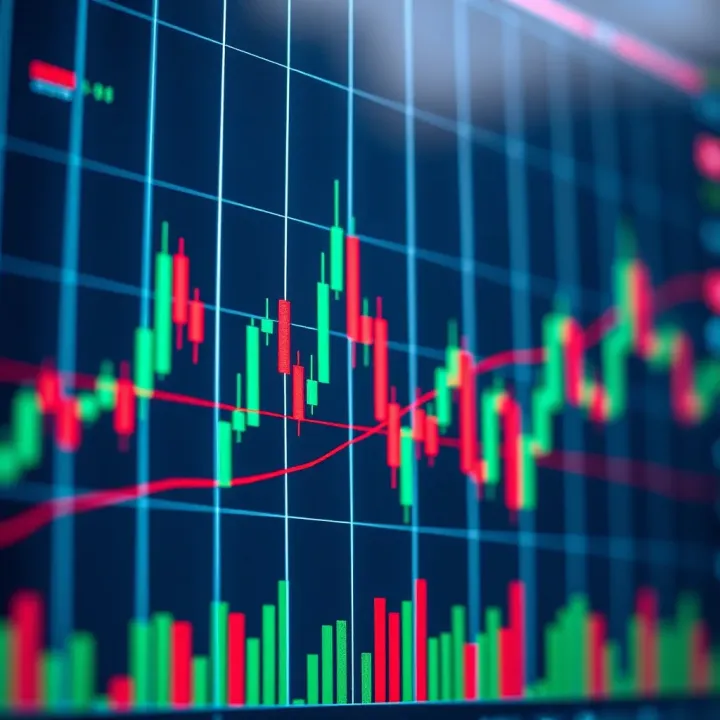
There are different types of charts Nigerian traders use to monitor currency moves: line charts, bar charts, and the popular candlestick charts. Each offers a different way of visualising data, with candlestick charts being favoured for their ability to show opening, closing, high, and low prices in a concise format.
Besides charts, traders also rely on indicators like the Relative Strength Index (RSI), Moving Averages, and Bollinger Bands to confirm trends or spot potential reversals. These indicators can help you avoid getting caught off guard by sudden market turns.
For Nigerian forex traders, combining chart reading skills with knowledge of global and local economic events is a practical approach for better trading outcomes.
To get started effectively, you should:
Choose a reliable trading platform that supports detailed chart analysis (e.g., MetaTrader 4/5)
Learn the basics of chart patterns like head and shoulders, double tops, and triangles
Track economic calendars for Nigerian and international releases that affect currencies
Familiarity with these tools and concepts will help you move beyond trading by chance. Instead, you trade with a plan based on evidence from charts and real market data. This practical guide will walk you through the essential chart types, key technical indicators, and strategies tailored for Nigeria’s forex market conditions.
Understanding these basics is the first step to mastering forex trading and turning market swings to your advantage.
Chart forex trading is about using visual tools to study currency price movements. Instead of guessing or relying on news alone, traders examine charts to spot trends, price changes, and possible market moves. For Nigerian traders, this approach is especially valuable because it helps navigate market swings influenced by both local and international factors, such as naira fluctuations or CBN policy changes.
At its core, chart forex trading means analysing historical and live price data shown on charts. Traders look at how prices shifted over time to decide when to buy or sell currencies like the dollar or euro versus the naira. For example, observing a consistent rise on a candlestick chart might suggest it’s time to buy USD/NGN before the rate climbs further. Essentially, charts provide a visual story of market behaviour, helping traders avoid acting on emotions or rumours.
Charts strip away the noise and let traders see clear patterns. For Nigerian traders who might face sudden market moves due to political events or economic announcements, charts offer a way to spot early warning signs about price changes. They allow you to track volatility, trend strength, and key support or resistance levels. The practical benefit is an improved chance to enter trades at better prices and reduce the risk of losses—vital in a volatile market where naira value can shift sharply.
A well-read chart can save you from jumping into trades without understanding the bigger picture, especially when the market is influenced by factors like oil price shocks or interest rate changes by the Central Bank of Nigeria.
Understanding charts requires familiarity with terms often used in forex analysis:
Pip: The smallest price move in a currency pair, usually the fourth decimal place. In USD/NGN, it represents small but significant price shifts.
Support: A price level where demand stops the price from falling further. For example, if USD/NGN keeps bouncing back near ₦460, that could be a support level.
Resistance: A price level where selling pressure prevents prices from rising further.
Trend: The general direction of price movement—rising (uptrend) or falling (downtrend).
Volatility: How much the price moves within a period. High volatility could mean bigger profits or losses, common during Nigeria’s ember months.
Knowing these basics helps Nigerian traders make sense of chart signals and make smarter decisions. Mastery of chart forex trading is not just about reading lines; it’s about translating them into actionable insights tailored to Nigeria’s unique market dynamics.
Understanding the common types of forex trading charts is essential for Nigerian traders to read market movements effectively. Each chart offers a unique way to visualise price data, helping traders spot trends, reversals, and opportunities. Choosing the right chart can save time and improve trading decisions, especially in a volatile market like forex where exchange rates can shift fast due to economic news or Central Bank policies.

Line charts are the most straightforward type, connecting closing prices over a selected timeframe with a continuous line. This simplicity makes them excellent for beginners who want a clear picture of general price direction without distractions. For instance, if you track the USD/NGN exchange rate on a daily line chart, you can quickly see whether the naira is strengthening or weakening over weeks or months.
However, line charts skip intraday price details like highs and lows, which might be vital for short-term traders. Still, their ease of use makes them great for a quick snapshot of overall price movement or to identify support and resistance points with minimal fuss.
Bar charts add depth by displaying open, high, low, and close prices for each trading period. Each vertical bar shows the full price range within that timeframe, offering more clues about trader sentiment and volatility.
Take, for example, a one-hour bar chart of the EUR/USD pair. The length of the bar reveals how volatile the market was during that hour. If the bar is long with a close near the high, it indicates buying pressure. Bar charts suit those who want more insight than the line chart but still prefer a straightforward layout without many colours or patterns interfering.
Candlestick charts are the favoured choice for many forex traders worldwide, including Nigerians, because they combine detailed price information with visually intuitive patterns. Like bar charts, candlesticks show open, high, low, and close prices, but their filled or hollow bodies and wicks make spotting patterns easier.
For example, during a period of market uncertainty affecting the GBP/USD pair, a ‘hammer’ candlestick might signal a potential reversal to the upside, useful to local traders looking to enter or exit positions. Recognising such patterns can provide timely trading signals backed by clear price action.
Candlestick charts, with their colourful representations and pattern recognition, help traders react faster to market sentiment shifts, making them highly valuable for daily and intraday trading on platforms like MetaTrader or investing apps used in Nigeria.
Choosing the appropriate chart type depends on your trading style and goals. While line charts simplify, bar charts detail, and candlesticks empower you with visual cues that can sharpen your forex game.
In summary, Nigerian forex traders benefit from mastering these charts' nuances. Start with line charts for trend clarity, use bar charts to add nuance, and adopt candlestick charts to unlock powerful pattern recognition for better trading outcomes.
Technical indicators play a significant role in forex chart analysis by helping traders interpret price data more clearly. For Nigerian traders, these tools provide practical insights that can improve decision-making, especially given the volatility in forex markets caused by factors like naira exchange rates and CBN policies. Understanding and using key technical indicators allows you to spot trends, gauge momentum, and assess market conditions without relying solely on gut feeling.
Moving averages smooth out price fluctuations to reveal underlying market trends. The two common types are the Simple Moving Average (SMA) and the Exponential Moving Average (EMA). SMA calculates the average price over a set period, for example 20 days, offering a clear sense of direction. EMA gives more weight to recent prices, making it more responsive to changes.
In practice, Nigerian traders often use the 50-day and 200-day moving averages to identify trend directions. For instance, when the 50-day average crosses above the 200-day, it can signal a bullish trend, suggesting a good time to buy USD against the naira. This "golden cross" is watched by many markets worldwide, including here.
RSI measures the speed and change of price movements, indicating whether a currency pair is overbought or oversold. The RSI scale runs from 0 to 100; readings above 70 suggest overbought conditions, while levels below 30 indicate oversold.
For example, if USD/NGN RSI hits 75, it could mean the naira is weakening too fast against the dollar, and a price correction may follow. This helps traders decide when to take profits or cut losses. Importantly, RSI works well alongside trend analysis to confirm potential reversals.
Bollinger Bands help assess market volatility by placing bands above and below a moving average. When the bands widen, it shows increased volatility; when they tighten, the market is calmer.
In Nigeria, where forex rates can swing sharply due to economic announcements, Bollinger Bands are handy for timing entry and exit points. For example, if the price touches the lower band during high volatility, it might signal a buying opportunity as the market rebounds. Conversely, touching the upper band can warn that prices may soon fall.
Understanding these indicators together offers Nigerian forex traders a clearer picture of market behaviour, reducing guesswork and increasing confidence in trading decisions.
In summary, mastering moving averages, RSI, and Bollinger Bands equips you with tools to interpret chart data accurately, align trades with market trends, and manage risk effectively in the Nigerian forex environment.
In forex trading, recognising chart patterns is a vital skill for predicting market direction. These patterns help traders make decisions based on historical price movements rather than guesswork. For Nigerian traders, this skill is especially useful due to the volatility in currency pairs like USD/NGN or EUR/NGN, where sudden shifts can mean big gains or losses.
Trend patterns show the general direction the price is moving. An uptrend indicates rising prices where the market forms higher highs and higher lows. Conversely, a downtrend features lower lows and lower highs. For example, if the USD/NGN pair consistently shows peaks moving upward over days or weeks, it signals an uptrend, suggesting it might be wise to open buy positions.
Spotting these trends early can prevent you from buying at a peak or selling at a low. Using trendlines drawn on charts as support or resistance guides helps visualise these moves clearly. Nigerian traders often combine trend patterns with news like CBN policy changes or dollar scarcity reports to refine timing.
Reversal patterns hint at a potential change in existing trends. The head and shoulders pattern resembles a peak (head) flanked by two smaller peaks (shoulders), signalling an upcoming downtrend after an uptrend. For instance, if the NGN gains against the dollar steadily but forms this pattern on the chart, it warns that the naira might weaken soon.
Similarly, double tops and double bottoms occur when prices test a resistance or support level twice but fail to break through. Double tops suggest impending price falls; double bottoms imply a possible rise. Recognising these gives Nigerian traders a heads-up to switch positions or prepare stop-loss orders.
Unlike reversals, continuation patterns indicate that the current trend is likely to continue after a brief pause. Flags appear as small rectangular consolidations after a sharp price move, while pennants are small symmetrical triangles.
For example, if the NGN/USD pair surges sharply and then forms a flag pattern, it suggests the uptrend will resume shortly. These patterns help traders avoid premature exits during short pauses and capitalise on sustained gains.
Mastering chart patterns isn't a magic fix but a practical approach. Combined with risk management and fundamental news, Nigerian traders can use these patterns to improve their timing and profitability in a market prone to swings.
In summary, familiarising yourself with trend, reversal, and continuation patterns equips you to anticipate market moves confidently. These patterns, backed by solid examples like the naira-dollar exchange behaviour, are indispensable for anyone active in the Nigerian forex market.
Chart analysis plays a vital role in improving decision-making for Nigerian forex traders. It offers a practical way to track price movements visually, spot trends, and anticipate market behaviour. Given Nigeria's exposure to global economic shifts and naira volatility, relying solely on fundamentals can leave traders scrambling. Chart analysis fills this gap by indicating potential entry and exit points when combined with local economic factors.
Selecting the right timeframe is essential for aligning trading strategies with market conditions. Day traders in Lagos, for instance, might prefer 15-minute or hourly charts to catch swift price swings influenced by local news or Central Bank of Nigeria (CBN) announcements. Long-term investors, however, benefit from daily or weekly charts to view broader trends, such as how naira devaluation impacts forex pairs over months. Understanding your trading horizon helps avoid overtrading or missing profitable moves.
Chart analysis should not exist in isolation. Combining it with fundamental data like Nigeria’s inflation rate, CBN monetary policy changes, or crude oil price shifts sharpens decision-making. For example, a sudden spike in oil prices often strengthens the naira, affecting USD/NGN forex movements. Using technical indicators like moving averages alongside fundamental insights gives a balanced view — say, confirming an uptrend on the chart after positive economic data.
Risk management is crucial, especially in the volatile Nigerian market, which is prone to sudden naira fluctuations and policy shifts. Traders use chart signals like support and resistance levels or RSI overbought/oversold alerts to set stop-loss and take-profit orders. For instance, when USD/NGN approaches a strong resistance on the chart, a trader could tighten stops or secure profits to limit losses from potential reversals. This disciplined approach helps contain risks amid uncertain economic developments or ember months’ market jitters.
Successful Nigerian traders combine clear chart analysis with fundamental awareness and strict risk control to navigate forex markets effectively.
Applying chart analysis thoughtfully and adapting to Nigeria’s unique market features leads to better trading outcomes and more confidence in managing money across global currencies.
📈 Discover the best time for forex trading in Nigeria! Learn how market hours, currency behaviors, and economic news can boost your trading strategy. ⏰💹

📈 Discover effective forex trading strategies tailored for Nigerian traders. Learn how to manage risks, use technical & fundamental methods, and tackle common challenges.
Discover trusted forex trading sites for Nigerian traders. Learn about regulation, fees, tools, and resources to trade confidently. 📈💰🌍

📈 Discover the best forex trading strategies and tips for Nigerian traders! Learn how to pick brokers, manage risks, and analyze markets for success. 🇳🇬💰
Based on 14 reviews