
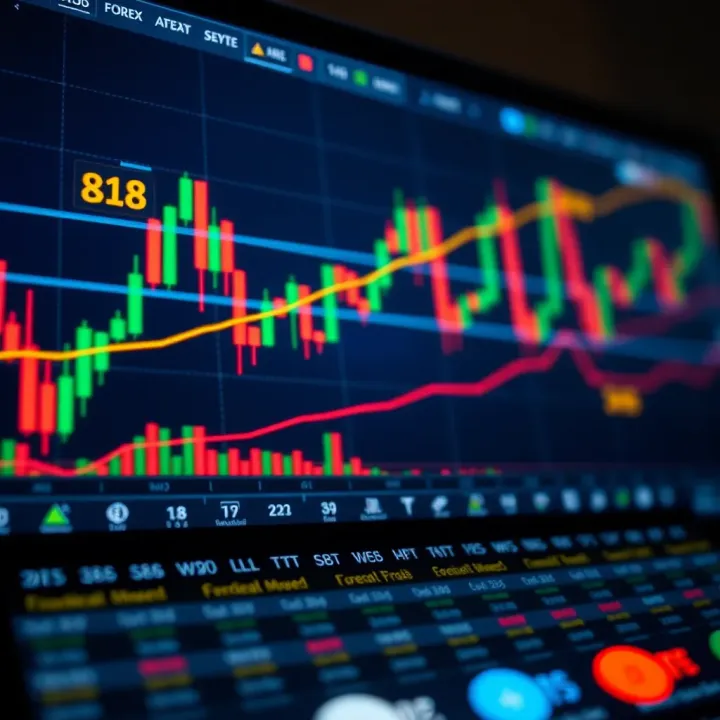
Effective Forex Trading Strategies for Nigerian Traders
📈 Master forex trading with practical tips on market basics, technical analysis, risk control, and mindset—designed for Nigerian traders aiming for success.
Edited By
Oliver Smith
Success in forex trading doesn’t come by accident, especially in Nigeria's volatile market. Whether you are a newbie navigating naira-dollar fluctuations or an experienced trader testing new strategies, having a solid trading plan is non-negotiable. A clear plan lays out your objectives, risk limits, and the methods you’ll use to trade effectively.
Many Nigerian traders dive into forex without a plan, which leads to losses and frustration, especially when the naira weakens or global events cause market shocks. This guide helps you build a practical forex trading plan tailored to Nigerian realities.

Key parts of your plan should include:
Setting clear goals: Define what you want from trading, whether it’s daily income, growing your capital over months, or hedging against inflation.
Risk management: Decide how much of your capital you can lose on any trade without hurting your overall finances. Many experts recommend risking no more than 1–2% per trade.
Strategy selection: You need a consistent approach — whether it’s scalping short-term movements or swing trading. Backtest strategies on demo accounts before betting real money.
Discipline and review: Stick to your rules even when the market looks tempting or scary, and regularly evaluate your performance.
Many Nigerian traders overlook the need for discipline, often chasing trends or reacting emotionally to naira fluctuations. A trading plan keeps you grounded and less prone to costly errors.
By building your plan with these elements, you get a roadmap that fits Nigeria’s unique economic environment. You’ll be able to trade with confidence, knowing you have set measures to protect your investments and maximise opportunities in forex markets.
A forex trading plan lays out the roadmap for your trading activities. Without it, navigating the volatile currency market feels like wandering aimlessly without a clue. Nigerian traders, in particular, face unique challenges such as naira volatility and irregular market movements. A clear plan helps you avoid impulsive trades driven by emotion or hype.
Trading on gut feelings or panic can quickly drain your capital. For example, a trader reacting impulsively to sudden naira depreciation might enter or exit trades without analysis, resulting in losses. A trading plan forces you to stick to predefined entry and exit points, limiting emotional reactions and protecting your funds. It turns trading into a disciplined process rather than a rollercoaster of hope and fear.
Many Nigerian traders start with hopes of quick riches, which often leads to disappointment. Defining achievable profit targets and acceptable risks helps set a clear expectation. For example, aiming for a consistent 3% monthly return instead of doubling your account in a week reduces the temptation of reckless bets. A plan establishes what success looks like tailored to your capital and time availability.
Consistent profits come from steady, measured decisions. A trading plan helps document and repeat successful strategies, keeping you from jumping between random approaches. For instance, if trend following works best during certain hours or currency pairs for you, the plan ensures you stick to it rather than chasing every market fad. This steadiness reduces costly mistakes and builds a reliable income over time.
A trading plan encourages keeping records of trades, including wins and losses. Reviewing these helps identify what works in the Nigerian market context, such as which pairs respond well to news events or volatility spikes. For example, noticing frequent losses on USD/NGN during CBN policy announcements may prompt strategy adjustments. This feedback loop sharpens your skills.
Currency markets shift with economic data, political events, and global trends. A plan isn't static; it must evolve. Nigerian traders who adapted their plan around fuel subsidy removals or election cycles often avoided big losses. A well-structured plan includes periodic reviews, allowing modification of risk limits or trading hours according to current market conditions.
Having a clear plan boosts confidence, reducing second-guessing. When your approach is documented and tested, you know exactly why each trade is entered or exited. Confidence can prevent hesitation during critical moments, such as managing trades during unexpected market swings. This calm can be the difference between a ₦50,000 gain and a loss on a ₦100,000 position.
A well-defined trading plan acts as your trading compass, keeping you grounded through market highs and lows, especially within Nigeria’s unique currency environment.
Trading without a plan is like driving blind; with one, you navigate wisely and grow steadily.

Clear trading objectives lay a solid foundation for success in forex trading. Knowing exactly what you aim to achieve helps you remain focused, avoid costly mistakes, and tailor your strategies to realistic outcomes. Nigerian traders benefit especially from defining objectives clearly because our markets can be volatile, and setting proper targets keeps you steady amid fluctuations.
Profit targets drive your trading activity by setting clear benchmarks for success. For example, aiming for a daily profit target of ₦5,000 shapes how you manage each trade and decide when to exit. Without profit targets, trades may drag on endlessly or stop-losses may be ignored, leading to emotional decisions instead of calculated moves.
Capital preservation is about protecting your investment against significant losses. Rather than chasing large profits recklessly, seasoned traders focus on not losing the initial capital. For instance, if you start with ₦200,000, you might set a rule to never risk more than 2% per trade, meaning your maximum loss is ₦4,000. This cautious approach keeps you in the game longer and reduces stress especially when unexpected events shake the market.
Time horizons describe how long you expect to hold your trades. Some traders prefer short-term scalping, closing positions in minutes to hours, while others take longer approaches, holding for days or weeks. Knowing your time horizon impacts strategy choice. For example, if you work a full-time job in Lagos with daily traffic, a shorter-term trading style that you can monitor during breaks may suit you better than waiting days to close orders.
Understanding your maximum losses means recognising how much you can afford to lose emotionally and financially without quitting trading. If a ₦10,000 loss causes distress or forces you to skip bills, your risk tolerance is low, and you should adjust your trade sizes accordingly. Setting this limit helps prevent impulsive trades designed to recover losses at high risk.
Market volatility impacts the forex market daily, with currency pairs like USD/NGN sometimes experiencing sharp swings due to political events or Central Bank of Nigeria (CBN) policy announcements. Traders must factor this in; high volatility means wider price swings, requiring looser stop-losses or smaller position sizes to avoid premature exits.
Your personal financial situation is critical before committing funds to forex. If you are supporting a family or repaying loans, allocating a small, disposable amount for trading rather than your entire savings is wiser. For example, using ₦50,000 instead of ₦500,000 reduces financial pressure and ensures trading remains a manageable hobby or side business rather than a risky full-time job.
Setting clear objectives and honestly assessing your risk capacity prepares you for disciplined trading. Without this clarity, even the best strategies may lead to losses.
Clear goals combined with realistic risk assessment make trading plans actionable. For Nigerian traders facing unique market conditions, these steps ensure you trade smartly and sustainably.
Risk management forms the backbone of any successful forex trading plan, especially for Nigerian traders facing volatile currency markets. Without clear rules, losses can quickly exceed manageable levels, wiping out gains and shaking your confidence. Setting concrete risk limits helps control exposure, safeguards your capital, and builds discipline—essentials for navigating forex over the long haul.
Using appropriate lot sizes means trading amounts that fit well within your total capital, reducing the chance of catastrophic losses. For instance, if you have a trading account of ₦500,000, risking 1–2% per trade limits your loss to ₦5,000–₦10,000 max. This approach avoids taking oversized positions common among beginners who might go all-in with a ‘big bet’ and get burnt quickly.
Avoiding excessive leverage protects you from the danger of amplified losses. Nigerian traders should resist the temptation to use high leverage, such as 1:500 or more offered by some brokers. While leverage can boost profits on paper, it equally multiplies losses, leading to margin calls that wipe out your account balance. Sticking to leverage ratios like 1:10 or 1:20 is much safer, allowing breathing room even when markets move against you.
Examples relevant to spread betting and margin calls clarify why risk control is vital. Suppose you open a position worth $10,000 (about ₦5 million) using 1:100 leverage, needing a margin of $100. A small adverse move of 1% equals a $100 loss—your entire margin. This triggers a margin call forcing you to add funds or close positions. Spread betting can behave similarly, where high leverage and large positions result in rapid depletion of your trading capital if stop losses are ignored.
Setting effective stop-loss limits means placing predetermined exit points to cap potential losses before entering trades. For example, if you buy EUR/USD at 1.2000, setting a stop-loss at 1.1950 limits your loss to 50 pips, protecting you from bigger downswings. By automating exit points, stop losses shield you from emotional decisions during market swings common in Nigerian markets.
When to adjust profit targets, it's essential to stay realistic and flexible. If market conditions change, for example, during economic announcements or heightened volatility, consider tightening profit targets. A target of 100 pips might reduce to 50 pips to secure gains before unexpected reversals wipe out profits.
Managing trades during market volatility involves vigilance and readiness to act fast. Nigerian traders often face volatile sessions due to global events or local economic reports. During such times, widening stop-losses, scaling down position size, or even temporarily pausing trading can save capital and reduce stress. A rigid plan that adapts to volatility keeps you in the game longer.
Remember, consistent risk management prevents your trading account from turning into a casualty of emotional decisions and unpredictable forex swings. It’s better to safeguard small losses than chase big wins you can’t afford.
By focusing on these rules, Nigerian forex traders can improve their chances of consistent profits and long-lasting success in the market.
Selecting the right trading strategy is a fundamental step in building an effective forex trading plan. For Nigerian traders, understanding and testing different approaches helps reduce risks and enhances potential for profit. Without a strategy tailored to market behaviour and personal risk appetite, trading becomes guesswork, often leading to quick losses.
Trend following involves identifying and trading in the direction of prevailing market momentum. This strategy assumes that currencies trending upward or downward will continue that way for a period. For example, if the USD/NGN pair is showing sustained upward movement due to economic news or central bank policy, a trend follower would enter a buy position to benefit from the extended move. Trend following suits traders who prefer holding positions several days or weeks, allowing them to ride market waves rather than chase short-term fluctuations.
Range trading focuses on markets that move sideways within well-defined support and resistance levels. When the price fluctuates between these bands, traders buy near support and sell near resistance. This strategy works well during periods without major economic events, when naira pairs like EUR/NGN or GBP/NGN trade within narrow ranges. Range trading requires discipline to exit before breakouts and careful stop-loss placement to manage sudden volatility.
Breakout strategies target price movements beyond established ranges or chart patterns. Traders watch for currency pairs breaking previous highs or lows, signalling a possible strong move. For instance, if USD/NGN breaks above a resistance level after CBN policy announcements, breakout traders enter early to capitalise on momentum. This approach demands prompt trade execution and strict risk controls, as false breakouts can trigger losses if trades stay open too long.
Using historical data to backtest strategies allows traders to see how their plan would have performed in past market conditions. This helps reveal strengths and weaknesses, especially for specific currency pairs popular in Nigeria, such as USD/NGN or EUR/NGN. Backtesting can be done with software or Excel, revealing if a strategy is profitable or needs tweaks before risking real money.
Practising with demo accounts provided by brokers like FXTM or HotForex gives new traders a risk-free environment to apply their strategy in current market conditions. Demo trading sharpens skills without financial pressure, allowing traders to experiment with lot sizes, stop-losses, and take-profit levels, building confidence before live trading.
Evaluating trade setups before live deployment means carefully analysing signals, risk-reward ratios, and market context every time a trade opportunity arises. This step prevents impulsive decisions common in volatile markets like Nigeria’s forex scene. For example, a trader might wait for confirmation of a trend reversal on charts before entering, rather than jumping in early and risking capital unnecessarily.
Effective testing and thoughtful strategy selection are the foundation of disciplined, successful forex trading. Nigerian traders benefit from blending local market awareness with these proven approaches to improve their trading outcomes.
In forex trading, discipline is more than just a buzzword—it’s the backbone of long-term success, especially in Nigeria’s volatile market. Keeping a steady hand amid price swings protects your capital and builds consistency. Meanwhile, continuous improvement ensures your trading plan stays relevant as market dynamics evolve. Together, they prevent knee-jerk reactions that often lead traders into avoidable losses.
Losses are part of trading—they test your nerves and resolve. The key is not to stray from your plan when a trade goes south. For instance, if you planned to risk only 2% of your capital per trade but find yourself increasing it after a loss, you’re already walking a dangerous path. sticking to predefined stop-loss limits helps you avoid turning a small loss into a bigger hole. This keeps your trading bankroll intact so you can trade another day, rather than yoyoing in and out of the market.
Overtrading is a common pitfall where traders place too many trades to recoup losses or chase profits. In Nigeria's market, where volatility can tempt you into nonstop action, this behaviour spoils your discipline and exposes you to unnecessary risks. A practical way to avoid this is by setting a daily maximum number of trades or a weekly loss limit. For example, limiting yourself to five trades a day or a ₦10,000 loss per week forces discipline. This avoids draining capital on mediocre setups born from frustration or greed.
Impulsive trades often come from pressing market news or personal emotions. Say, after hearing a rumour about possible CBN policy changes, an undisciplined trader might jump into positions without proper analysis. Resisting this requires mental control and relying solely on your trading plan. One useful habit is to pause for at least 15 minutes after market-moving news before considering new trades. This buffer lets you make clearer decisions based on analysis, not just hype or fear.
A trading journal records every trade's details—entry price, exit price, reason for trade, emotions, and outcomes. For Nigerian traders, keeping this journal digitally or even handwritten helps spot patterns in both gains and losses. It’s like holding up a mirror to your trading habits. For instance, you might discover you perform poorly on Monday mornings or overtrade during ember months due to stress. This awareness is the first step to fixing flaws.
Every lost trade is an opportunity to learn, if you choose to reflect honestly. Instead of blaming the market or brokers, dissect what went wrong. Was your stop-loss too wide, or did you enter without confirmation? Nigerian traders often face challenges like erratic news flow disrupting markets, so adapting to those spikes rather than blaming them improves decisions. Over time, learning from mistakes builds a sharper, smarter trader.
Markets don't stand still, and your trading plan shouldn’t either. Nigeria’s forex scene can shift due to policy announcements, naira depreciation, or global events impacting liquidity and volatility. For example, if you notice price swings widening during political campaigns, you might tighten stop-losses or reduce trade size temporarily. Regularly reviewing the plan allows you to tweak strategies, ensuring they fit current realities and don’t become outdated relics.
Maintaining discipline and reviewing your trades keeps you grounded. Without these, even the best trading plan is just words on paper.
In sum, discipline and ongoing improvement turn trading plans into reliable guides—not wish lists. Armed with these habits, Nigerian traders can navigate forex markets confidently and steadily build wealth in naira terms over time.
📈 Master forex trading with practical tips on market basics, technical analysis, risk control, and mindset—designed for Nigerian traders aiming for success.

📈 Discover the best time for forex trading in Nigeria! Learn how market hours, currency behaviors, and economic news can boost your trading strategy. ⏰💹

📈 Discover effective forex trading strategies tailored for Nigerian traders. Learn how to manage risks, use technical & fundamental methods, and tackle common challenges.
Discover trusted forex trading sites for Nigerian traders. Learn about regulation, fees, tools, and resources to trade confidently. 📈💰🌍
Based on 9 reviews