

Basics of Forex Trading for Nigerian Beginners
💹 Explore forex trading basics in Nigeria: understand currency pairs, market players, strategies, and risk management for smarter investments! 📈
Edited By
Edward James
When trading forex in Nigeria, recognising chart patterns is a vital skill that separates casual traders from those making consistent profits. These patterns reflect how price movements unfold over time, offering clues about potential market directions.
Understanding forex chart patterns is not about guesswork; it’s about spotting recurring shapes formed by price action on a graph. For example, a 'head and shoulders' pattern might signal a market reversal, while a 'flag' pattern often points to a temporary pause before the trend continues. These formations help traders anticipate moves and place trades with greater confidence.
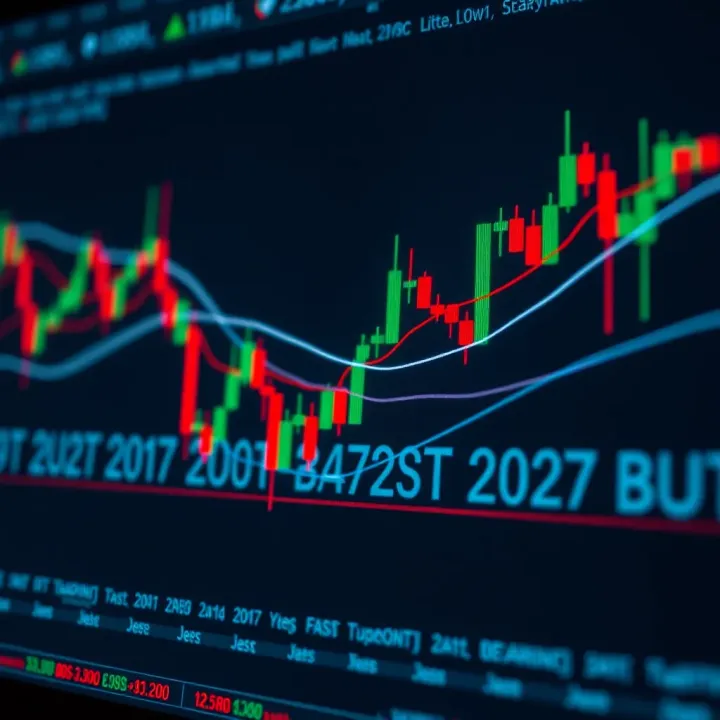
Mastering chart patterns means you can read market psychology—when bulls or bears might take control—leading to smarter entry and exit points.
To get started, traders should focus on a few key patterns:
Reversal Patterns: Like the double top or double bottom, which often indicate a trend change.
Continuation Patterns: Such as triangles and flags, suggesting the trend will persist.
Bilateral Patterns: These suggest price can break out either way, so caution is needed.
Spotting these patterns requires patience and practice, but once learned, they provide a framework for decision-making.
In the Nigerian forex market, combining chart pattern analysis with other tools like support and resistance levels or indicators (e.g., moving averages or RSI) improves accuracy. Given market volatility influenced by factors like naira fluctuation, economic reports, and geopolitical events, relying solely on patterns without confirmation can be risky.
This article will walk you through recognising common chart patterns, explain practical examples from the Nigerian market, highlight frequent errors to avoid, and show how to blend patterns with other strategies for better trading outcomes. Whether you're an investor, broker, or financial analyst, understanding these patterns will give you a sharper edge in navigating the complex forex space.
Start with recognising shapes, then apply them alongside solid risk management to trade forex smarter and protect your capital 💹.
Forex chart patterns provide traders with a visual map of market behaviour, revealing how buyers and sellers interact over time. They offer concrete clues about when a particular currency pair might continue its current trend or reverse direction. For example, spotting a "head and shoulders" pattern early can help a trader anticipate a bearish reversal before the market drops, enabling better entry or exit decisions.
Understanding these patterns is essential because they distil complex market movements into recognizable shapes and signals. This makes them practical tools in analysing currencies like USD/NGN, where naira volatility can cause sharp price swings. By reading these patterns carefully, traders can act with more confidence, reducing guesswork and improving risk management.
Forex chart patterns are specific formations created by price movements on a chart, reflecting collective market sentiment over time. These patterns, such as triangles, flags, or double tops, help traders predict potential price direction. Their significance rests on the idea that markets move in trends and that history often repeats itself because human psychology influences trading behaviour consistently.
For instance, when a double bottom forms on a USD/GBP pair chart, it signals repeated testing of a price floor, suggesting strong buying interest and a possible upward move. Traders use this to time their buy orders, aiming to ride the anticipated bullish momentum.
Patterns mirror trader emotions, such as fear, greed, or indecision, that drive price actions. A rising wedge, for example, indicates diminishing buying strength, hinting at an upcoming weakness in the market. When traders see this pattern, they understand that the confident pushes higher are losing steam, possibly leading to a price drop.
This psychological insight helps in practical terms: if you witness a pattern showing hesitation or reversal signs, you may avoid entering a long position prematurely or tighten stop-loss orders to protect gains.
Three chart types dominate forex analysis: candlestick, line, and bar charts. Each presents data differently but supports pattern recognition.
Candlestick charts display the open, high, low, and close prices for a period, using shapes that vividly reveal trading pressure. Nigerian traders often prefer candlesticks for their clear signals, like doji or engulfing patterns.
Line charts connect closing prices with a simple line, providing a straightforward trend overview but less detail.
Bar charts show price movement ranges with vertical lines and ticks for opening and closing prices, offering precise highs and lows.
Choosing the right chart depends on the trader's style and the level of detail required.
Trends reflect the overall market direction: bullish means prices are generally rising, while bearish indicates a downward move. Recognising these trends early through chart patterns helps traders align their strategies accordingly. For example, spotting ascending triangle patterns suggests bullish continuation, signalling that buying strength is overpowering selling pressure.
Trading against the trend, like buying in a clear bearish market, often leads to losses unless timed perfectly with reversal signals.
Support lines mark price levels where buyers tend to step in, preventing prices from falling further. Resistance lines indicate points where sellers dominate, capping price rises. Chart patterns often form around these levels, highlighting critical decision points.
Take the example of a double top pattern forming near a resistance zone; it highlights the market failing to break higher twice, signaling a possible reversal. Practical trading involves using these levels to set stop-loss or take-profit points, reducing risk exposure.
Some patterns signal that the current trend is about to end (reversals), while others suggest it will persist (continuations). Reversal patterns like the head and shoulders show exhaustion of buying or selling; continuation patterns like flags indicate brief pauses before the trend resumes.
For instance, after a strong bullish run on NGN/USD, a flag pattern might appear as consolidation before more gains. Recognising these helps avoid premature exits or entries, tuning trades to the market rhythm.
Forex chart patterns are not crystal balls; they’re tools reflecting trader behaviour and market forces, helping you make smarter moves rather than guesses.

Knowing common forex chart patterns is key to making smart trades. These patterns help traders predict market direction by revealing the balance between buyers and sellers. For instance, recognising a reversal pattern early can save you from losses or help lock in profits. Equally, understanding continuation patterns allows you to ride ongoing trends with more confidence.
This pattern signals a probable trend reversal. Imagine it as three peaks: the middle one (head) stands taller than the other two (shoulders). When the price breaks below the "neckline" drawn at the lows between these peaks, you get a sell signal. Traders often use it to exit long positions or go short, especially after an uptrend. In Nigerian markets, where sharp currency moves happen, spotting this pattern early on pairs like NGN/USD can be very rewarding.
Double tops form after an uptrend, marking resistance at a price level tested twice and failing to break higher. When the price breaks below the support level between the two peaks, it suggests a bearish reversal. Conversely, a double bottom shows buyers defending a price level twice after a downtrend, hinting at a bullish reversal once the price breaks above resistance. Both patterns allow traders to time entries for trend reversals, reducing the risk of catching falling knives or missing rallies.
These are extensions of the double versions but indicate stronger price barriers tested three times. The triple top signals the market's repeated failure to push higher, suggesting a solid reversal downward if support breaks. The triple bottom suggests strong buying support, paving way for upward movement once resistance gives way. While less common, their presence often points to higher-probability trades because they've tested key levels multiple times.
Flags and pennants appear as short pauses in a strong trend. Flags resemble small rectangles slanting against the main trend, while pennants look like small symmetrical triangles. Both indicate consolidation before the trend continues. For traders, these patterns offer opportunities to enter trades in the trend's direction after the breakout, often with tight stop losses.
Triangles form as price narrows between converging trendlines. An ascending triangle suggests buyers pushing higher lows, signalling bullish bias, especially when resistance breaks. Descending triangles show sellers lowering highs, indicating bearish pressure. Symmetrical triangles imply uncertainty, with breakout direction providing the trade signal. Nigerian forex traders benefit from watching these patterns on pairs like NGN/GBP, where market moves can be choppy but predictably break after consolidation.
Rectangles occur when price moves sideways between clear resistance and support levels. This pause reflects indecision in the market. A breakout above resistance or below support signals a return to trend or reversal. For example, if NGN/USD trades in a rectangle during a consolidation, a strong breakout could lead to a quick and sharp move, giving a trader a timing edge to join the move early.
Mastering these common forex chart patterns gives you the tools to anticipate market shifts, manage risks better, and optimise entry and exit points—vital skills for trading Nigerian naira pairs amid local market fluctuations.
Identifying forex chart patterns accurately is key for successful trading, especially in volatile markets like Nigeria’s. Traders who can spot genuine patterns and confirm them effectively tend to make better decisions and reduce unnecessary losses. This section breaks down how to read patterns correctly and support your analysis with reliable indicators.
Spotting key highs and lows forms the foundation of chart pattern recognition. These points mark where price movements pause or reverse, shaping patterns like head and shoulders or double tops. For example, identifying a higher low followed by another rise can signal an ascending triangle—a pattern hinting at a possible upside breakout. Observing these high and low points on charts helps traders pinpoint entry or exit positions accurately.
Volume confirmation acts as a reality check when reading patterns. Rising trading volume during a breakout confirms market conviction, while low volume could indicate a false signal. Suppose the price breaks out from a bullish flag pattern but volume remains subdued; a trader might hold back before committing capital. In the Nigerian forex environment, volume spikes often accompany news events about naira fluctuations or monetary policies, giving extra weight to pattern signals.
Time frame considerations can change how patterns are interpreted. Short-term traders might find that patterns on 15-minute or hourly charts give quick signals, but these can be noisy or unreliable compared to daily or weekly charts. For instance, a double bottom on a 5-minute chart may just be temporary market noise. Longer time frames usually provide stronger confirmations, especially when trading pairs like NGN/USD where market liquidity varies.
Moving averages smooth out price action and highlight trends. When moving averages intersect or align with a chart pattern, it strengthens signal reliability. For example, a crossover of the 50-day moving average above the 200-day moving average—called a golden cross—alongside a bullish pattern reinforces buying signals. Nigerian traders can use simple moving averages or exponential ones to monitor trends amidst naira volatility.
The Relative Strength Index (RSI) gauges momentum by showing if a currency pair is overbought or oversold. An RSI reading above 70 usually signals overbought conditions, possibly hinting at an upcoming reversal, while below 30 suggests oversold levels. When a double top forms, confirming with RSI divergence (price making a second top but RSI showing a lower high) adds confidence before selling. This indicator is quite handy during Nigeria’s market reactions to geopolitical shifts or economic reports.
MACD (Moving Average Convergence Divergence) combines trend-following with momentum. It tracks the difference between two moving averages and signals buy or sell points through crossovers or divergences. For instance, if a bullish pennant pattern is forming and the MACD line crosses above its signal line, traders get additional proof to enter a long position. MACD is commonly available on platforms like MetaTrader and TradingView, popular among Nigerian forex traders.
Paying close attention to pattern shapes, volume, time frames, and complementary indicators significantly improves the chances of spotting profitable trades while reducing false signals. In Nigeria's forex market, combining these elements helps you navigate naira fluctuations and sudden market swings more skilfully.
In summary, mastering pattern identification involves sharp observation of price highs and lows, verifying moves with volume, choosing the right time frame, and using indicators like moving averages, RSI, and MACD. This balanced approach equips you to trade forex charts with more confidence and precision.
Practical trading strategies built on forex chart patterns give traders a clearer edge in timing their trades. Patterns don’t just look pretty; they guide traders on when to enter and exit trades, helping to manage risks while aiming for better profits. This section breaks down key steps, showing how to apply these patterns effectively for daily trading decisions.
Breakout trading involves entering a trade when the price breaks a well-identified level – usually a support or resistance line formed by a chart pattern. For example, if the price has repeatedly struggled to rise above a certain point, a breakout above that level may signal strong buying pressure. Nigerian traders watching NGN/USD could spot a breakout above resistance and quickly enter, hoping to ride the momentum. The key is confirming the breakout with volume or other indicators to avoid being tricked by a false move.
Stop-loss placement helps manage losses if the trade goes against you. After identifying a breakout, placing a stop-loss slightly below the breakout level (for a buy) or above it (for a sell) prevents heavy losses during market reversals. Say you entered a trade on NGN/GBP after a breakout; setting a stop-loss near the closing low of the breakout candle could protect your capital should the breakout fail.
Profit targets define where you take profits during a trade. Using chart patterns, traders often measure the pattern’s height and project it from the breakout point to estimate realistic targets. For instance, if a triangle pattern’s widest section is ₦10,000, projecting that from the breakout suggests a target of ₦10,000 gain. This approach gives a structured exit plan, stopping traders from holding on too long and losing gains.
Position sizing is about adjusting the size of each trade based on your risk tolerance and stop-loss levels. Even with a strong pattern, you shouldn’t risk more than a small percentage of your total trading fund on one trade. For example, if you have ₦500,000 in your trading account and decide to risk 2%, that means risking ₦10,000 per trade. Correct position sizing shields you from a string of losses that could otherwise wipe out your capital.
Avoiding false breakouts prevents buying into moves that fail quickly. False breakouts are common in volatile pairs involving the naira due to sharp sell-offs or sudden news impact. Traders should wait for confirmation signals like a second candle closing beyond the breakout or volume spike before entering. This extra caution reduces chances of being caught in quick reversals.
Combining with fundamental analysis strengthens pattern-based strategies by adding context. For example, if an NGN/USD pair shows a bullish pattern breakout but Nigeria’s central bank announces a policy tightening or forex rationing, it may dampen the pattern’s effect. By watching news from bodies like CBN or developments in crude oil prices, traders can avoid entering trades that technical signals alone might support but fundamentals disapprove.
A well-rounded approach that blends chart patterns with strict entry-exit rules and risk control increases the chances of success, especially in Nigeria’s often volatile forex market.
Proper use of these practical strategies helps Nigerian forex traders to cut losses, lock in profits, and navigate the charts with confidence.
When trading forex chart patterns, making avoidable mistakes can lead to unnecessary losses. Understanding common pitfalls helps traders navigate the market with sharper insight. This section highlights key errors and offers practical steps to sidestep them, improving decision-making and overall trading success.
Over-reliance on patterns often blinds traders to other important market signals. Some traders expect every pattern to predict price action perfectly, ignoring that markets can defy textbook behaviours. For instance, a head and shoulders pattern might not always signal a reversal if broader market conditions suggest otherwise. Relying solely on patterns can turn trading into guesswork.
Instead, use chart patterns as one tool among many. Combine them with indicators, volume, and news analysis. This balanced approach helps you avoid costly mistakes when the market swings unexpectedly.
Confusing similar shapes is another common issue. Patterns like double tops and head and shoulders can look alike, but their implications differ. Misidentifying these can lead to wrong entry points. For example, mistaking a double top for a triple top might cause you to exit too early or too late, missing out on profits or exposing yourself to losses.
To prevent this, study each pattern’s unique traits. Practice identifying key features such as peak counts, neckline formations, and volume changes. Simulated trading can help sharpen your eye before risking real capital.
Ignoring market context weakens pattern reliability. Forex patterns don't exist in isolation; they respond to macroeconomic factors, central bank announcements, and geopolitical shifts. A bullish flag pattern during a naira crisis might not play out the same way it would in stable conditions.
Always check the bigger picture before acting on patterns. Ask yourself: What is the current economic outlook? How volatile is the ₦ exchange rate today? Including market context helps you confirm if a pattern is trustworthy or likely to fail.
Skipping volume analysis is a critical oversight. Volume adds weight to chart patterns, confirming whether a breakout or reversal has real support. For example, a breakout from a triangle with low volume might be a false signal, leading to premature trades.
Nigerian traders especially need to watch volume carefully on pairs involving the naira, as liquidity varies widely. Make volume a routine part of your pattern confirmation process to avoid falling prey to fake moves.
Neglecting indicators like Moving Averages, RSI, or MACD limits confirmation. These tools help verify the strength and momentum behind patterns. For example, a double bottom pattern paired with an RSI below 30 often suggests oversold conditions and a likely bounce.
Ignoring these indicators isolates your analysis, increasing risk. Use them alongside chart patterns to build confidence before entering trades.
Not considering news events ruins even looked-perfect patterns. Sudden announcements—such as unexpected CBN policy shifts or fuel subsidy changes—can upend patterns instantly. For example, a bullish continuation on NGN/USD can disappear after a disruptive political event.
Always check the economic calendar and recent news before taking action on patterns. Integrating fundamental awareness protects your trades from surprises that technicals alone cannot foresee.
Avoiding these mistakes ensures you don’t just see shapes; you understand what they truly mean in the market. It’s this blend of technical skill and context that makes trading smarter and more profitable.
With these guides in mind, you’re better equipped to read forex chart patterns accurately and use them effectively in Nigeria’s dynamic trading environment.
Understanding how to use forex chart patterns within Nigeria’s trading context can give traders a distinct edge. The Nigerian market has its unique quirks—from naira fluctuations to local economic events—that directly influence price movements on charts. By tailoring chart pattern analysis to these specifics, traders can read signals more accurately and make smarter entry and exit calls.
Among Nigerian forex traders, pairs involving the naira such as NGN/USD and NGN/GBP dominate the scene. These pairs are crucial because they reflect Nigeria’s external trade relations and monetary stability. For example, fluctuations in crude oil prices often ripple quickly into these pairs, affecting pattern formations like double tops or head and shoulders. Recognising these patterns on naira pairs helps traders anticipate moves tied to local and international developments.
The naira’s volatility adds both challenges and opportunities. Sudden policy announcements by the Central Bank of Nigeria (CBN) or shifts in import-export balances can cause sharp price swings that might distort typical pattern shapes. Traders need to adjust their pattern thresholds and watch for false breakouts more closely, especially during economic news releases. For instance, a breakout might not confirm a true trend change but react to temporary naira market jitters.
Local market factors such as government policies, fuel price changes, or election cycles also leave their mark on forex charts. Events like the annual ember months or fuel subsidy alterations tend to trigger heightened trading activity and volatility. Familiarity with these influences means traders can anticipate when standard chart patterns might behave differently and adapt their strategies accordingly.
Nigerian traders benefit from both local and international brokers. Platforms like FXTM, InstaForex, and local subsidiaries of global firms provide access to naira pairs with varying spreads and execution speeds. Choosing brokers regulated by the Nigerian Securities and Exchange Commission (SEC) or the CBN ensures safer trading environments and better protection against market malpractice.
Popular charting platforms such as MetaTrader 4/5 (MT4/MT5) and TradingView are widely used in Nigeria. These platforms offer comprehensive tools for pattern drawing, indicator integration, and backtesting. TradingView’s cloud-based interface caters well to traders without high-end PCs, while MT4 remains popular for its reliability with brokers. Both support multi-timeframe analysis essential for confirming forex patterns.
Mobile trading apps have gained popularity among Nigerian retail traders, thanks to widespread smartphone use. Apps like OPay FX, FXTM Trader, and MT4 mobile offer seamless chart access and real-time alerts on price patterns. This accessibility allows traders to monitor evolving chart patterns and respond swiftly, even while navigating Lagos traffic or during daily routines.
Using local insights alongside global forex tools creates the best conditions for successful naira-based trading. Recognising how typical chart patterns play out differently on NGN pairs, combined with the right platforms, equips Nigerian traders to make well-informed moves.
💹 Explore forex trading basics in Nigeria: understand currency pairs, market players, strategies, and risk management for smarter investments! 📈

📘 Find the best forex trading book for your level with our practical guide. Learn what to look for and boost your trading skills effectively today!

🤖 Looking to pick the best forex trading robot in Nigeria? Discover key features, pros & cons, costs, and tips to trade smartly and safely with automation.

Master forex trading in Nigeria 🇳🇬 by choosing the right indicators. Learn how to combine tools, avoid mistakes, and tailor strategies for success 📊💡
Based on 8 reviews