
Best Forex Trading in Nigeria: Complete Guide
Explore top forex brokers, Nigeria's trading rules, and key tips to trade wisely. Master the forex market with our easy, expert guide! 📊💹🇳🇬
Edited By
Amelia Foster
Forex trading in Nigeria is gaining traction, but many traders still overlook the value of having a forex trading certificate. This document shows you know your stuff and helps build trust with brokers and clients. More importantly, it sharpens your trading skills by grounding you in key principles and regulations.
A forex trading certificate proves you understand the ins and outs of currency markets, risk management, and trading platforms. In Nigeria, where the forex market faces tight regulation by the Securities and Exchange Commission (SEC) and sometimes volatile naira fluctuations, certification is a serious advantage. It sets you apart in a crowded field and shows regulators and potential investors you operate professionally.
Skill Enhancement: Certification courses cover essential strategies and tools, improving your trading decisions.
Regulatory Compliance: Knowing Nigerian laws and SEC requirements helps you avoid penalties or scams.
Market Credibility: Brokers and investors prefer certified traders because it signals reliability.
Networking Opportunities: Certification programmes often connect you to seasoned traders and institutions.
Earning a forex trading certificate doesn't just boost your credentials—it equips you with practical knowledge to survive Nigeria's dynamic forex environment.
Professional Certificates: These focus on technical analysis, trading psychology, and platform use.
Regulatory Compliance Certificates: Centered on understanding rules by bodies like the SEC Nigeria.
Risk Management Certificates: Teach strategies to protect capital amid volatile naira movements.
Some Nigerian traders also pursue internationally recognised credentials from institutes such as the Chartered Institute for Securities & Investment (CISI) or the Forex Traders Association, which enhances global credibility.
With this foundation, you can explore how to select the right certification body and practical steps to get certified, so you trade confidently and securely in Nigeria’s forex market.
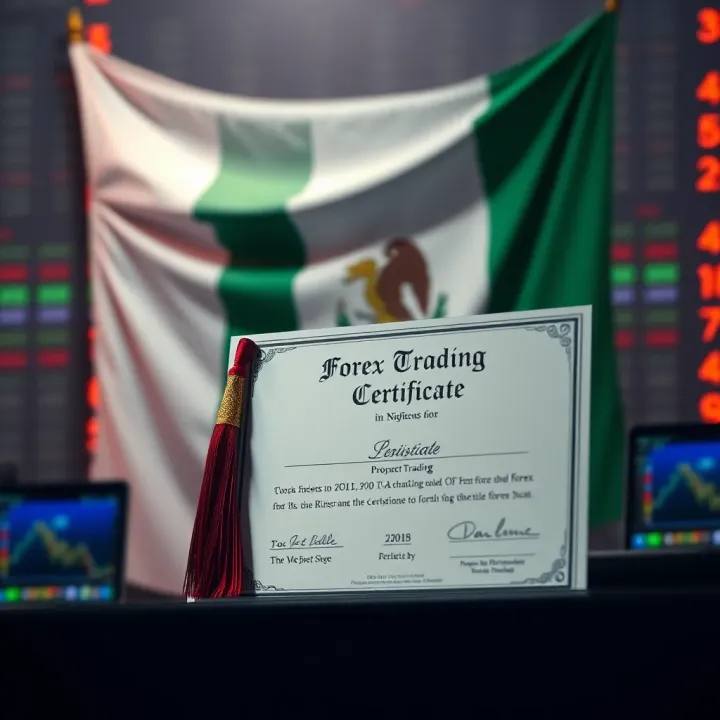
A forex trading certificate serves as a formal proof that an individual has undergone structured learning and training in currency trading. This certification confirms a trader’s understanding of the market mechanisms, trading strategies, and risk management principles essential for forex trading. For Nigerian traders eager to navigate the highly volatile forex market, such certification offers a clear foundation in theory and practical knowledge.
Forex trading certificates are designed to equip traders with verified skills and knowledge, reducing guesswork and enhancing trading discipline. For example, a Nigerian trader who completes such a course often gains insights into how currency prices respond to economic indicators like Nigeria’s inflation or Central Bank of Nigeria (CBN) policies. This is not just about passing exams but developing the ability to read market trends and price movements with confidence.
The certification also acts as a commitment to continuous learning. It encourages traders to update their knowledge regularly, which is especially useful as forex markets can be affected by geopolitical events or sudden changes in oil prices, influences that directly impact the naira exchange rate.
In trading circles, a forex certificate signifies a trader’s seriousness and formal preparation, separating casual participants from those who treat trading as a profession. It’s a mark that the certificate holder understands the nuances of market analysis, including fundamental and technical analysis. For instance, a forex-certified trader knows how to interpret candlestick patterns or apply moving averages, skills often missing in self-taught traders.
Moreover, certification conveys trust and competence to brokers and potential clients. If a Nigerian trader is aiming to manage funds or offer advisory services, presenting a recognised certificate can open doors that would otherwise remain closed due to lack of formal proof of expertise.
In Nigeria, forex trading is popular but also fraught with scams and unreliable operators. Having a recognised certificate builds credibility, signaling to brokers that the trader understands market risks and regulatory standards. This trust is crucial when negotiating better trading conditions or partnerships.
Clients seeking trading guidance prefer certified traders since this reflects professionalism. For example, if someone wants to copy trade or invest based on a trader's signals, certification offers peace of mind that the trader follows disciplined strategies instead of relying on luck.
Certification programmes force traders to learn proven strategies systematically and avoid common pitfalls like overtrading or emotional decision-making. A trader who has been through formal training will likely follow a well-defined trading plan, including entry and exit points, rather than impulsively reacting to market noise.
This kind of knowledge builds discipline, a rare quality in the often speculative forex environment. A Nigerian trader might, for example, decide to cut losses early rather than hold losing positions hoping for reversal — a habit encouraged by sound certification courses.
One of the biggest benefits of forex certification is risk reduction. Trained traders understand how to manage leverage and apply stop-loss orders to protect capital. Given that many Nigerian traders use borrowed funds or leverage through brokers, saving themselves from sudden losses is vital.
Practical modules in certification courses also teach how to avoid scams and recognise unregulated brokers, a common problem in Nigeria. This knowledge helps traders safeguard their investments and stick to legal trading platforms.
A forex trading certificate isn’t a magic wand for success but an essential tool that builds solid trading foundations, helping Nigerian traders trade smarter and safer.
Choosing the right forex trading certificate depends heavily on understanding the types available. This helps Nigerian traders select programmes that fit their needs, whether they seek global recognition or local relevance. Certificates vary not only by issuing bodies but also by the depth of training, practical exposure, and assessment standards.
Certificates offered by global organisations carry significant weight in the forex trading community. Bodies such as the Chartered Institute for Securities & Investment (CISI) in the UK or the American Association of Professional Traders (AAPTA) provide certifications recognised worldwide. These certificates show that the holder has met international standards in forex trading theory and practice, which can open opportunities beyond Nigerian borders.
Practically, industry-recognised certificates reassure brokers and clients about a trader’s competence. For instance, completing a Certified Forex Trader Programme by a respected body often includes detailed modules on technical analysis, risk control, and regulatory compliance—all essential for professional trading. Such certifications also tend to be more rigorous, involving both exams and practical assignments.
Popular forex training and certification providers include online platforms like Forex School Online and Online Trading Academy, which offer structured courses validated by global certification standards. These providers often cater to a global audience, so Nigerian traders benefit from exposure to diverse market conditions and strategies widely accepted in international trading circles.
Local academies and training centres in Nigeria focus on the specific trading environment, regulations, and challenges faced by Nigerian traders. Examples include Lagos-based forex training schools which provide hands-on classroom sessions about local market operators, regulatory updates from the Securities and Exchange Commission Nigeria (SEC Nigeria), and how to leverage popular Nigerian fintech tools like Paystack or OPay for transactions.
For many Nigerians, these local options offer more accessible pricing and flexible scheduling, perfect for those balancing forex training with jobs or studies. They also provide networking opportunities with peers and mentors within the local community.
Online and blended certification courses expand access further, combining digital lessons with periodic face-to-face sessions or webinars. Platforms that deliver such blends often update course content to reflect dynamic forex laws, naira fluctuations, and CBN policy impacts, making them very relevant. This approach works well for Nigerians who want quality education without relocating or long-term absence from work.
Forex trading certificates, whether global or local, sharpen your skills and boost your credibility. Choosing the right type ensures your training matches your goals—be it professional growth or better trading discipline in Nigeria's unique market.
Forex trading certification offers Nigerian traders more than just a piece of paper; it equips them with practical skills that deepen their understanding of the markets and boost their chances of success. In Nigeria, where forex trading is growing fast, a formal certificate distinguishes serious traders from novices and builds trust with brokers, clients, and partners alike.
A core part of forex certification is mastering chart analysis. This involves reading price charts, recognising patterns, and interpreting technical indicators like moving averages, RSI (Relative Strength Index), and Fibonacci retracement. These tools help traders predict market movements and decide when to buy or sell. For instance, a certified trader might spot a head-and-shoulders pattern signalling a reversal, enabling timely trades that reduce loss and maximise profit.
Technical skills also include understanding candlestick formations common in forex charts. Knowing how to interpret these signals helps Nigerian traders avoid guesswork. This clarity especially matters where market volatility is high, like during Nigerian political events or embers months when trading activity spikes.
Risk management is vital in forex trading, where rapid price swings can lead to big losses. Certification programmes teach traders how to set stop-loss orders—predefined points to exit losing trades to protect capital. They also cover position sizing, which means determining how much money to risk on each trade relative to the total account size.
For example, a Nigerian trader might learn to risk only 1-2% of their account per trade, preventing a few bad trades from wiping out their capital. Additionally, techniques like diversification across currency pairs and using leverage wisely feature prominently in certified courses. These skills directly tackle the common pitfalls many local traders face, especially when trading with borrowed funds.
Holding a forex trading certificate signals a level of competence that reassures brokers, investors, and clients. This is crucial in Nigeria’s rapidly evolving trading environment, where trust can be thin. For example, a trader pitching to family and friends for investment is more likely to secure funds when backed by credible certification showing they understand market dynamics and risk controls.
Being certified also sets traders apart in conversations with brokers. Some brokers might offer better trading terms or exclusive access to webinars and market insights if they know you are formally educated. This professionalism increases the likelihood of fruitful trading relationships.
Beyond individual trading, certification can open doors to careers in financial institutions, asset management firms, or fintech companies emerging in Nigeria. For instance, companies like Paystack, Flutterwave, or local brokerages may prefer hiring candidates with verifiable forex knowledge.
Further, the certificate may qualify Nigerian traders to join professional bodies or attend advanced workshops, reinforcing career growth. Even for those working independently, certification boosts credibility when seeking consulting roles or managing forex training sessions, offering a steady stream of income beyond trading profits.
In forex trading, knowledge backed by certification not only sharpens skills but also boosts trust and unlocks professional prospects, making it a worthy investment for every Nigerian trader.
Obtaining a forex trading certificate involves deliberate steps that ensure you gain not just a piece of paper, but real knowledge and skills to navigate the forex market confidently. For Nigerian traders, following a clear process protects against wasting time and money on substandard courses. It also positions you to build trust with brokers and potential clients by showing you’re serious and qualified.
Selecting the right course starts with reviewing its syllabus closely. You want to pick a programme that covers both technical and fundamental analysis, risk management, and trading psychology. For example, a qualitative course will teach you how to interpret candlestick patterns and use indicators like the Relative Strength Index (RSI) or Moving Averages, alongside practical risk controls to protect your capital.
Who teaches the course matters just as much. Experienced instructors with a track record in forex trading or financial markets bring valuable insights that theory alone can’t provide. Nigerian traders might prefer providers who combine local market knowledge with global trading concepts. Checking an instructor’s background via professional profiles or reviews can guide you to credible trainers.
Accreditation provides assurance that the course meets certain standards. Look for certifications recognised either by global financial bodies or local authorities like the Nigerian Stock Exchange or financial training institutes. This adds weight to your certificate when engaging with brokers or employers.
Also, read reviews from past participants. Honest feedback may reveal whether the programme delivers on its promises or if there are gaps. For instance, some traders have found online courses lacking in practical examples relevant to Nigeria’s unique forex environment, such as how to handle intermittent internet connectivity or local payment methods.
Consistently participating in all training sessions is crucial. Whether it’s in-person lectures or an online series, real engagement helps you grasp complex topics like leverage effects or margin calls. For example, during a module on chart analysis, following live demonstrations of price action can accelerate your understanding faster than reading alone.
Active attendance also allows you to ask questions and clarify doubts early. This prevents costly trading mistakes that often arise from misconceptions or incomplete knowledge.
Exams and assignments test your ability to apply what you’ve learned. They might include analysing real market data, building trading plans, or simulating trades using demo accounts. Completing these builds confidence and prepares you for live trading.
Successful assessments also signify to certificating bodies that you have met their standards. This increases your marketability among brokers or firms looking for competent traders.
Once you receive your forex trading certificate, it’s important to confirm its legitimacy. Genuine certificates typically have unique identifiers, official stamps, or digital verification portals offered by the training institute or accreditation body.
Verifying authenticity prevents fraud and reinforces your credibility. Imagine showing a certificate during partnership talks or presentations; having a verified document makes a stronger impression.
Certification is not just for display—it should translate to improved performance. Applying your learnt skills with discipline and the right risk management can reduce losses and identify profitable opportunities.
For instance, using proper position sizing techniques or setting stop-loss orders effectively shows that your training is paying off. Plus, when you engage with brokers, certification can sometimes unlock access to better trading conditions or tailored mentorship.
Obtaining a forex trading certificate the right way equips Nigerian traders not just with knowledge, but with recognised proof of competence that can open doors and enhance real-world trading results.
Understanding forex trading certificates is essential, but some myths around them tend to mislead many Nigerian traders. Clearing up these misconceptions helps set realistic expectations and encourages a more measured approach to forex trading as a skill and profession.
It’s common for new traders to think that owning a forex trading certificate means guaranteed profits. This is a misconception worth correcting right away. A certificate reflects that you have completed structured training and passed assessments on forex principles, market analysis, and risk management. However, the highly volatile nature of forex markets means that no certification can promise consistent gains. Profitability depends on many factors beyond certificates — including market conditions, trader psychology, money management, and experience.
For example, even trained traders sometimes suffer losses due to unexpected global events or shifts in currency values. A certificate equips you to make informed decisions but doesn't shield you completely from market risks. Nigerian traders must understand that forex remains a high-risk venture, and certificates are tools to sharpen your knowledge, not magic keys to profits.
Another myth is assuming that everyone with a forex trading certificate is an expert trader. In reality, certification measures knowledge at a particular time, usually focused on fundamentals and practical skills taught during the course. It does not always translate to hands-on expertise or success in live trading conditions.
Experience plays a critical role in shaping a trader's ability to respond to real market forces. Many certified traders struggle in live markets initially because emotional control and swift decision-making require more than theoretical understanding. For instance, a trader who completed a course but hasn't practised consistently over months or years may lag behind a less formally certified peer who has traded actively for a long time.
This distinction matters for Nigerian traders considering career paths or partnerships. Certificates add credibility and open doors, but ongoing learning and market exposure remain essential to becoming truly skilled. Recognising this gap prevents unrealistic expectations and encourages continuous improvement beyond certification.
Remember: Forex trading certificates help build the foundation, but mastery requires patience, practice, and keeping up with market trends.
In summary, while forex trading certificates are valuable, they do not guarantee profits nor instant expertise. Nigerian traders should view them as important steps in a longer journey of skill acquisition and prudent risk management.
Selecting the right forex training provider in Nigeria can make a significant difference between a shallow understanding of the market and becoming a skilled, confident trader. With numerous academies and online courses available, knowing what to look for ensures you invest your time and money in quality education that truly benefits your trading journey.
A good training provider must have competent trainers with proven experience in forex trading. Look for instructors who have worked in the markets themselves, understand Nigerian trading conditions, and explain concepts clearly. For example, a trainer who has navigated the naira's volatility and knows local liquidity issues can offer insights unavailable in generic courses.
The course should provide a clear roadmap, starting with basics before moving to advanced strategies. Practical sessions including chart analysis, risk management drills, and live demo trading are essential. Also consider whether lessons are in-person, online, or blended. For traders in Lagos or Abuja, physical classes might offer direct interaction, while online classes add flexibility for those in smaller towns.
Price matters, but cheap courses might lack depth and post-course support. A quality provider offers after-training assistance, such as mentorship or access to trading communities. For instance, a ₦50,000 course that includes weekly coaching calls may prove better than a ₦30,000 one with no follow-up. Always ask about refunds, additional fees, and payment plans before committing.
Some Nigerian academies have built solid reputations by providing practical, results-driven training. The FX Academy Nigeria and the Lagos Forex Institute, for example, have helped numerous traders sharpen skills while adapting strategies to local market realities. Their programmes usually combine classroom interaction with hands-on practice tailored to Nigerians.
Online platforms like Learn2Trade Nigeria and ForexMasteryNG offer flexible certification courses with updated materials relevant to the Nigerian context. These platforms often provide multimedia content and community forums, making it easier to connect with fellow traders and share real-time market updates. Online training suits busy professionals who cannot commit to fixed schedules in a classroom.
Choosing a forex training provider is not just about obtaining a certificate; it's about gaining skills that work specifically for Nigeria’s unique trading environment. Focus on expertise, course design, cost-effectiveness, and support to make an informed choice.
Explore top forex brokers, Nigeria's trading rules, and key tips to trade wisely. Master the forex market with our easy, expert guide! 📊💹🇳🇬

📈 Discover clear steps to start Forex trading in Nigeria. Learn market basics, strategies, risk management, and legal tips to trade confidently and smartly.
Explore forex trading in Nigeria 🇳🇬 with practical tips, market insights, and regulatory guidance to help beginners start confidently and navigate challenges.
🌍 New to forex trading in Nigeria? Learn how currency pairs work, explore trading platforms, and discover smart strategies to start trading confidently.
Based on 15 reviews