
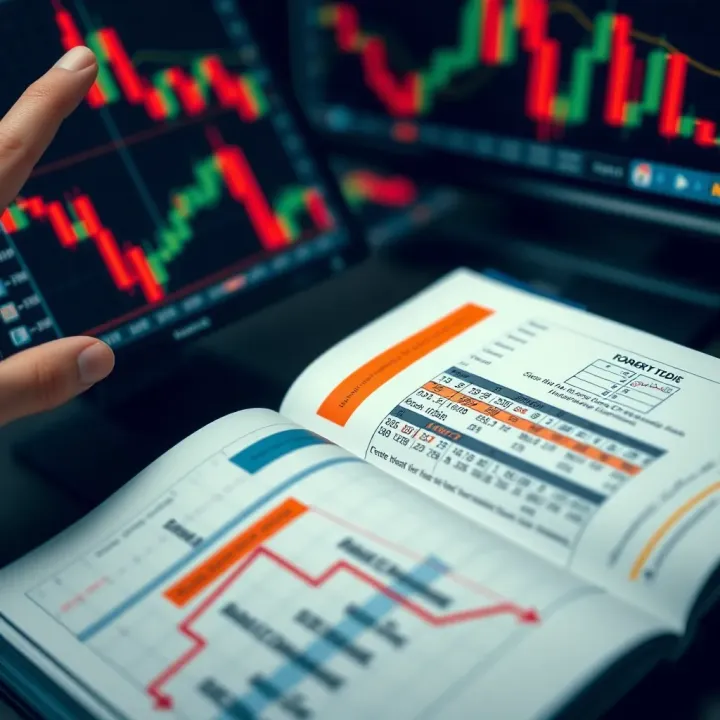
Choosing the Best Forex Trading Book
📘 Find the best forex trading book for your level with our practical guide. Learn what to look for and boost your trading skills effectively today!
Edited By
Emily Foster
Forex trading has gained popularity among Nigerians seeking alternative income streams beyond traditional jobs or business ventures. It involves buying and selling currencies on the global market, aiming to profit from exchange rate fluctuations. However, stepping into forex trading without a firm grasp of the basics is like trying to navigate Lagos traffic without knowing the routes.
One key in starting forex trading is understanding what moves the currency market. Factors like Nigeria’s inflation rate, Central Bank of Nigeria (CBN) monetary policy, crude oil prices, and political events can affect the naira's value. For example, when oil prices drop sharply, the naira usually weakens, creating forex trading opportunities but also increasing risk.
Before you begin, choosing the right forex broker registered with the relevant regulatory body in Nigeria is essential. Trusted platforms should offer transparent fees, quick deposits and withdrawals in naira, and good customer support. Popular brokers servicing Nigerian traders include FXTM, OctaFX, and HotForex. Beware of scams promising guaranteed profits — forex trading requires patience and discipline.
To navigate the risks, start with a small capital you can afford to lose. Use demo accounts to practise trades without risking real money. Once confident, trade with real funds but always set stop-loss orders to limit possible losses. Never rush into high leverage deals; while tempting, they amplify both gains and losses.
Here’s a straightforward checklist to get started:
Learn basic forex terms: pips, lots, spread, leverage
Select a reliable broker: check reviews and licences
Create and verify your trading account: usually requires NIN and BVN
Start with a demo account: practice trading strategies
Develop a trading plan: define entry and exit points, risk tolerance
Trading forex in Nigeria offers a real chance for financial growth if approached carefully. Understanding local market influences and managing risks will help you make smarter decisions rather than gambling with your money.
This guide will explore these elements in practical terms, helping you build a solid foundation to trade forex safely in the Nigerian context.
Before putting your money into forex trading, it's essential to grasp the basics. Understanding forex trading helps you avoid costly mistakes and makes your trading journey smoother. For Nigerian traders, knowing how currency pairs work and the key terms involved sets a strong foundation for success, especially with the naira's fluctuating position against major currencies.
Forex, short for foreign exchange, is the market where currencies are bought and sold. Every trade involves two currencies, grouped as a currency pair. For example, the USD/NGN pair shows how many Nigerian naira one US dollar can buy. This pairing system is crucial because it reflects the value relationship between two currencies.
Trading forex means speculating on whether one currency will strengthen or weaken against another. You don’t physically exchange cash but trade contracts representing those currencies. For instance, if you believe the euro will rise against the dollar, you buy the EUR/USD pair. If correct, you sell later at a higher price to earn profit. This process demands keen market observation and an understanding of both the global and Nigerian economic factors affecting currency movements.
Majors include pairs with the world’s most traded currencies, like USD/EUR, USD/JPY, and USD/GBP. They usually have tighter spreads and more liquidity, meaning it's cheaper and easier to trade them. Nigerians often focus on USD pairs since the naira’s stability often hinges on the dollar’s movement. Minor pairs involve currencies from emerging markets or two non-USD currencies, like EUR/GBP or AUD/NZD, which might have wider spreads and less volume, making them riskier for beginners.
A pip is the smallest price move a currency pair can make, often the fourth decimal point. For example, if USD/NGN moves from 460.00 to 460.01, that’s one pip. Lots are standardized units of the trade size; a standard lot equals 100,000 units of the base currency. Most beginners use mini or micro lots to manage risks. Leverage allows you to control larger amounts with smaller capital. A 1:100 leverage means ₦1,000 can control ₦100,000 in the market. While leverage boosts profits, it also magnifies losses, so knowing how to use it wisely is vital.
The spread is the difference between the buying price (ask) and selling price (bid) of a currency pair. It’s how brokers make money, so tighter spreads are better for traders. Margin is the amount of money you need to open a trade, essentially a deposit with your broker. For example, if margin is 1%, to control ₦1,000,000, you need ₦10,000 in your account. Lastly, a stop loss is an order to automatically close your trade at a certain loss point, protecting your capital from unexpected moves. Using stop loss orders is one of the best ways to manage risk in volatile forex markets.
Understanding these basics not only protects you from common pitfalls but also helps you trade more confidently and strategically. For Nigerians, this means better handling of our currency's quirks and navigating forex markets with realistic expectations.
Getting started with forex trading in Nigeria demands careful attention to local realities and practical steps. Knowing how to choose a trustworthy broker, set up your trading account, and navigate currency concerns significantly boosts your chances of success. This section will walk you through these essentials with clear advice tailored for Nigerian traders.
Regulation ensures brokers operate transparently and protect traders’ funds. In Nigeria, the Nigerian Securities and Exchange Commission (SEC) oversees financial markets but forex remains loosely regulated. Therefore, many traders look for brokers authorised by well-known bodies like the UK's Financial Conduct Authority (FCA) or Australia's ASIC. These international regulators impose strict standards that can reduce risks of scams, which are unfortunately common locally.
Always verify the broker’s regulatory status on official websites and never trade with platforms lacking any credible licence. This approach helps you avoid problems like sudden account freezes or withdrawal refusals.
You’ll find many Nigerian forex brokers promising quick local support and easier naira deposits. While local brokers may offer convenience, they sometimes lack the global experience and regulatory oversight that international brokers provide. International brokers tend to have better trading platforms, tighter spreads, and more currency pairs.
That said, some local brokers partner with international firms to combine easy fund transfers and robust trading conditions. Choose based on your priority: if you want fast deposits in naira, a reputable local broker can work; but if you prefer a broader market reach and stronger regulation, international brokers like IG or XM might suit you.
The quality of the trading platform affects everything from ease of use to speed of execution. MetaTrader 4 and MetaTrader 5 (MT4 and MT5) remain popular for their simplicity and advanced tools. Some brokers offer proprietary platforms, which can be good but always test their demo versions first.
Look closely at fees that might eat into your profits, such as spreads, commissions, and withdrawal charges. For instance, a broker with a low spread but high withdrawal fees might end up costing more. Nigerian traders should watch for hidden costs related to currency conversion and fund transfers.
Opening a trading account usually requires valid identification and proof of residence. In Nigeria, the Bank Verification Number (BVN) plays a vital role. Many brokers will ask for your BVN alongside your national ID or driver’s licence to verify your identity and comply with anti-money laundering rules.
Having your BVN ready speeds up account approval and makes funding smoother, especially when using Nigerian banks for transfers.
Nigerian traders benefit from popular deposit options like bank transfers via USSD codes (e.g., using your bank’s USSD service), Quickteller, or payment platforms such as Paystack and Flutterwave. Cryptocurrency deposits are also growing, but these carry higher risks and require careful choice of brokers who support them.
Banks like GTBank and Access Bank are often supported by brokers, so your deposit clears faster. Avoid brokers demanding only international wire transfers, as these can be slow and expensive.
Since most forex accounts are in US dollars or euros, Nigerian traders face the impact of naira conversion rates. If your broker doesn’t support naira accounts, converting your funds during deposit or withdrawal can trigger unfavourable exchange rates or extra charges.
Some brokers offer naira-denominated accounts or local payment methods that help reduce conversion costs. Always factor these costs into your trading budget, especially with the naira’s ongoing volatility. Planning for these expenses helps keep your profits intact.
Starting forex in Nigeria requires more than knowing market basics; it demands choosing the right broker, navigating document rules, and understanding how your naira translates in the global currency space. These practical steps lay the foundation for smoother and safer trading experience.
This section provides the necessary groundwork for beginners in Nigeria to make informed decisions as they start forex trading, emphasising local context and real-world considerations.
Starting forex trading without a clear understanding of basic strategies and tools is like setting off on a journey without a map. For Nigerian beginners, grasping these essentials helps avoid common pitfalls and boosts confidence in decision-making. Effective strategies help you read market moves realistically, while tools aid in executing trades with precision. Without these, you risk following hearsay instead of data, which often leads to losses.
Market analysis breaks down into two main types: fundamental and technical. Fundamental analysis looks beyond charts to factors influencing currency values. It involves keeping an eye on economic data like Nigeria’s inflation rate, Central Bank of Nigeria (CBN) policies, and global events such as oil price changes that impact the naira. For example, a sudden increase in Nigeria’s inflation can weaken the naira against the dollar, signalling a possible drop in forex value. This helps traders make informed decisions instead of guessing.
Technical analysis, on the other hand, focuses on price movements and patterns on charts. Tools like candlestick charts, moving averages, and Relative Strength Index (RSI) give visual cues about market sentiment. For instance, if the EUR/USD pair shows a consistent upward trend line, a trader might consider buying, expecting the rise to continue. Technical analysis suits those who prefer concrete data over economic news because it reflects market psychology directly through price action.
Two popular and straightforward strategies are trend following and breakout strategies. Trend following involves identifying the general direction of a currency’s price and trading in that direction. If the naira-dollar exchange rate has been rising for days, a trend follower buys, betting the momentum will last. Breakout strategies spot when prices break through key support or resistance levels, signaling strong moves ahead. For example, if the USD/NGN price breaks above a resistance point seen several times before, a breakout trader enters a buy position anticipating a sharp rise.
Risk management is the backbone of successful forex trading. Beginners should always set stop-loss orders to limit potential losses. Suppose you buy GBP/USD at 1.3200, you might set a stop-loss at 1.3150, meaning your loss caps at 50 pips if the market moves against you. Never risk more than 1-2% of your trading capital on a single trade to preserve funds. This approach protects you from devastating losses during volatile periods, especially given the naira's frequent fluctuations.
Practising these basic strategies and tools step-by-step makes forex trading manageable and reduces chances of costly mistakes, particularly for Nigerian beginners navigating a complex market.
By blending fundamental insight with technical indicators and managing risks smartly, you'll be better prepared to make rational trades — crucial for long-term success in forex.
In forex trading, managing risks well separates those who stay afloat from those who quickly lose their capital. This is especially true for Nigerian beginners navigating a market that is both volatile and sometimes unregulated. Being aware of the risks and common mistakes equips you to protect your ₦ and trade with confidence. Practical risk management helps you keep losses small, learn from errors, and steadily build your skills.
Leverage allows you to control a much larger position with a relatively small amount of capital. For instance, with 50:1 leverage, ₦10,000 can open a trade worth ₦500,000. While this can amplify your profits, it equally increases potential losses. A small market move against your position can wipe out your account quickly. In Nigeria, where many brokers offer high leverage ratios, beginners often get tempted to trade big on little capital, risking everything on one bet.
It’s crucial to understand that leverage is a double-edged sword. Using it irresponsibly can lead to losing more than your original investment. A sensible approach is to use low leverage and never risk more than 1-2% of your trading capital on a single trade. This way, even if a trade doesn’t go your way, you can stay in the game and learn.
Forex markets are highly volatile. Prices can swing sharply within minutes due to economic data releases or geopolitical developments. For Nigerians, local factors like naira exchange rate changes or government policy announcements can create sudden market movements. Such volatility presents opportunities but also significant risks.
If you trade without understanding volatility, you might be caught in rapid price movements that trigger your stop losses unnecessarily, leading to frustration and losses. Adopting strategies that account for volatility, like setting wider stop losses during peak data releases or reducing trade size, can help you cope better.
Many new traders fall into the trap of overtrading — entering too many trades too frequently, often driven by fear of missing out or revenge trading after losses. Emotion-driven decisions often lead to poor timing and ill-judged positions, draining capital fast.
For example, after a losing trade on the naira-dollar pair, a beginner might immediately open another larger trade hoping to recover quickly. This usually backfires, making losses bigger. It’s essential to stick to a trading plan and exercise patience, letting proper trade setups develop.
In Nigeria’s booming but loosely regulated forex environment, scams are common. Many unregulated brokers advertise huge returns with little risk, targeting inexperienced traders. Falling for such schemes can result in losing your deposit or having your funds frozen.
To avoid this, always choose brokers regulated by reputable bodies like the Securities and Exchange Commission (SEC) Nigeria or the Central Bank of Nigeria (CBN). Verify broker credentials thoroughly and avoid those promising unrealistic profits. Trustworthy brokers like FXTM or HotForex have established reputations and safer platforms for Nigerians.
Remember: Protecting your capital is the foundation of successful forex trading. Understanding risk and avoiding common errors will save you from costly mistakes and build trading confidence gradually.
By managing risks carefully and learning from experience, Nigerian traders can navigate forex markets much more safely and efficiently.
Navigating forex trading in Nigeria requires more than just understanding the market principles. Practical tips are necessary to help traders manage local challenges like naira volatility, exchange control policies, and the unpredictable economic landscape. Proper tools and disciplined habits can make the difference between consistent profits and costly mistakes.
Keeping an eye on local news and market updates is essential for Nigerian forex traders. Economic indicators like the CBN’s monetary policy announcements, inflation figures, or FX policy shifts can strongly influence the naira and other currencies commonly traded in Nigeria. For example, a sudden change in fuel subsidy or electricity tariffs often causes market jitters affecting currency values. Regularly following reputable Nigerian business news outlets such as BusinessDay, Nairametrics, or Punch can provide timely insights to guide trade decisions.
Local political events also impact forex trading. Election seasons, state-level policy changes, or unexpected government directives can introduce volatility. Traders who tune into these updates can better anticipate market movements instead of reacting late to sudden shocks.
For practical trading, reliable apps play a big role. In Nigeria, platforms like MetaTrader 4 and 5 remain popular for forex trading due to their user-friendly interface and robust analytic tools. Apps like OANDA and IG offer comprehensive market data alongside trading capabilities and support for Naira-based accounts.
Some Nigerian traders also leverage fintech apps such as Paystack and Flutterwave to smoothly fund their trading accounts or withdraw proceeds, bypassing traditional banking delays. Meanwhile, news aggregator apps delivering financial headlines and currency alerts in real-time help traders stay ahead without having to check multiple sources constantly.
Many new traders expect to become millionaires overnight, which often leads to frustration and poor decisions. Setting realistic goals means outlining achievable profits, say, 2-3% monthly returns, rather than chasing huge, risky trades. This approach helps traders stick to sensible trade sizes and manage risk better.
In the Nigerian context, it’s also wise to factor in costs like internet bills, data subscriptions, and possible downtimes. By setting realistic time frames and profit targets, traders avoid overtrading and preserve capital for long-term success.
A trading journal is more than just a record of wins and losses. It forces you to analyse your decisions critically. Writing down why you entered or exited a trade, what market factors influenced you, and what mistakes you made helps improve future strategies.
For instance, if you notice that rash decisions usually follow power outages or when the internet is slow, you can plan trades around more stable times. Nigerian traders who maintain journals often find themselves more disciplined, patient, and better prepared for market swings.
Practical discipline and dependable tools combined can help Nigerian forex traders move beyond guesswork and approach trading as a sustainable venture rather than a gamble.
📘 Find the best forex trading book for your level with our practical guide. Learn what to look for and boost your trading skills effectively today!
Explore top forex brokers, Nigeria's trading rules, and key tips to trade wisely. Master the forex market with our easy, expert guide! 📊💹🇳🇬

📚 Discover top forex trading books for all levels! From beginner guides to advanced tactics, enhance your skills and reach your trading goals today.

📈 Discover clear steps to start Forex trading in Nigeria. Learn market basics, strategies, risk management, and legal tips to trade confidently and smartly.
Based on 6 reviews