

Effective Forex Trading Strategies for Nigerian Traders
📈 Discover effective forex trading strategies tailored for Nigerian traders. Learn how to manage risks, use technical & fundamental methods, and tackle common challenges.
Edited By
Sophia Mitchell
Forex trading has grown steadily in Nigeria, with more people keen to add extra streams of income and build wealth beyond traditional means. Yet, success in forex isn't just about hoping the market moves your way; it demands solid strategies tailored to Nigeria's economic landscape and trading conditions.
Traders here must consider factors like the naira's volatility, the influence of the Central Bank of Nigeria (CBN) policies, and access to reliable internet and power supply. These realities shape how one approaches forex trading compared to other global markets.

Whether you're a beginner stepping into the forex scene or an experienced trader looking to sharpen your game, understanding diverse strategies—ranging from fundamental analysis of global economic indicators to technical chart reading—can set you apart. Proper risk management is especially key in Nigeria, where sudden policy changes or naira fluctuations can affect open positions without warning.
To navigate forex confidently, it is vital to blend knowledge of both the broader market events and precise timing techniques based on price movement signals.
In this guide, you will find practical strategies that work within Nigeria's unique context. Expect clear explanations and actionable tips designed to help you protect and grow your capital, avoid common pitfalls, and enter trades with increased confidence. These strategies also align with popular Nigerian forex platforms and tools to make implementation straightforward.
Getting started with the right mindset and approach is the first step towards turning forex trading from mere speculation into reliable income generation. Let's explore relevant methods that every Nigerian trader should know to maximise opportunities and minimise losses in the forex market.
Forex trading can be a rewarding way to grow your ₦, but success doesn't come automatically. For Nigerian traders especially, understanding forex trading strategies is essential to navigate the complexities of both local and global markets. These strategies help you identify when to enter or exit trades, manage risks, and maximise profits amid the volatile currency markets.
The forex market operates 24/5, moving constantly with global economic shifts and local economic factors such as Central Bank of Nigeria (CBN) policies or naira exchange rate fluctuations. Without a strategy, it’s like driving in Lagos traffic without a route; you’ll waste time, resources, and likely end up with losses. For example, knowing when to trade around major CBN policy announcements or global events can make a significant difference to your trading outcome.
Forex trading involves buying and selling currencies against each other. The goal is to benefit from changes in exchange rates. For instance, if you believe the naira will weaken against the US dollar, you might buy dollars now and sell them later at a higher price. Currencies trade in pairs — like USD/NGN or EUR/USD — reflecting the value of one currency relative to another. This market is the largest and most liquid in the world, but it demands constant attention and understanding of economic indicators, political news, and market sentiment.
Having a strategy means you trade based on rules, not guesswork or emotion. The forex market can be unpredictable, with prices influenced by news, speculation, and shifting trends. A clear strategy helps you avoid impulsive decisions, such as overtrading during volatility or holding losing positions too long. For example, a risk management plan ensuring you never risk more than 2% of your account on a single trade can save your capital during stormy market periods.
Moreover, strategies like scalping, swing trading, or position trading fit different traders’ goals and risk tolerance. Picking a strategy that aligns with your schedule and personality can improve consistency and profits.
Successful forex trading depends more on disciplined strategy and risk control than on luck or quick tips.
Nigerian traders face specific obstacles that make good strategies even more vital. Currency volatility around naira, due to import pressures and oil price swings, can be extreme. Also, internet instability and power outages affect real-time trading decisions.
Sometimes, delays in funding or withdrawing from trading platforms happen due to local bank restrictions or currency controls, forcing traders to plan their cash flow accordingly. Scams and unregulated brokers remain a risk, so choosing trusted brokers is critical.
Lastly, many Nigerian traders battle with information overload — with numerous signals, social media hype, and unverified tips confusing beginners. Having a tested, personal strategy cuts through this noise and builds confidence.
Fundamental analysis helps traders understand the underlying forces driving currency values. For Nigerian traders, this approach means looking beyond price charts to economic data, policies, and events influencing the naira and global currencies. By grasping these drivers, traders can make better-informed decisions instead of relying purely on speculation.
Interest rates, especially those set by the Central Bank of Nigeria (CBN), directly affect the naira’s strength. When the CBN hikes rates, it often attracts foreign investors looking for better returns—this can increase naira demand and strengthen the currency. Conversely, if inflation rises sharply without matching interest rate hikes, the naira may weaken as purchasing power drops.
For example, during periods when Nigeria’s inflation rate has worsened beyond the targeted range, traders have noticed the naira slide against the dollar. Monitoring these indicators helps anticipate such moves and adjust trading positions accordingly.
GDP measures the total economic output of Nigeria and is a broad reflection of economic health. A rising GDP generally signals a growing economy, which can attract foreign investment and support the naira.
If the Nigerian economy shows resilience despite oil price fluctuations, forex traders might expect the naira to hold steady or strengthen. However, a declining GDP—perhaps due to disruptions in oil production or agriculture—might suggest naira weakness ahead, prompting traders to be cautious about naira pairs.
Employment statistics indicate the level of job creation or unemployment in Nigeria, reflecting economic stability and consumer spending power. Strong employment data means Nigerians have income to spend, boosting economic activity—often positive for currency strength.

On the other hand, rising unemployment can undermine confidence in the economy and the naira. For forex traders, sudden changes in employment figures often precede market moves, especially if expectations are missed.
The CBN’s policies heavily influence forex markets in Nigeria. Beyond interest rates, the bank manages foreign exchange interventions and currency restrictions. For instance, during naira liquidity shortages, the CBN may limit dollar sales or introduce forex trading windows, affecting market supply and demand. Nigerian traders must watch CBN announcements closely as they can lead to sharp naira movements.
Global happenings like oil price shifts, geopolitical tensions, or changes in US Federal Reserve policies can ripple into the Nigerian forex scene. Since Nigeria is a major oil exporter, fluctuations in oil prices significantly impact the naira's value. Also, tightening by the US Fed tends to strengthen the dollar globally, often putting pressure on emerging market currencies like the naira.
Understanding these fundamental factors lets Nigerian traders anticipate market moves rather than react blindly, providing an edge in the competitive forex market.
In summary, keeping an eye on economic indicators, CBN policy changes, and global events equips Nigerian traders with practical insights to navigate forex markets more successfully.
Technical analysis plays a key role in forex trading, especially for Nigerian traders seeking an edge in the fast-moving currency markets. This approach uses historical price data and chart patterns to predict future price movements, offering a practical way to make informed trading decisions without needing complex fundamentals. Leveraging technical analysis helps traders spot market trends early, identify entry and exit points, and manage risk effectively.
The Head and Shoulders pattern signals a potential trend reversal. It consists of three peaks: a higher peak (the head) between two lower peaks (the shoulders). For Nigerian traders, spotting this pattern on currency pairs like USD/NGN could hint at an end to a bullish run, suggesting it’s time to consider selling or tightening stop-loss orders. The inverse Head and Shoulders signals a possible bullish reversal after a downtrend, guiding traders on timing their long positions.
Double Top and Double Bottom patterns mark key reversal points as well. A Double Top appears as two peaks at roughly the same price level, often signalling the end of an upward trend. This might be particularly useful during periods of naira weakness when traders anticipate a price correction. Conversely, a Double Bottom forms two roughly equal troughs and suggests a uptrend could start. Understanding these patterns enables traders to time exits or entries near significant support or resistance.
Triangles and Flags are continuation patterns indicating brief pauses before the market resumes its trend. A triangle narrows as price action gets tighter, pointing to a breakout in the direction of the prior move. Flags are small, tight rectangles that slope against the prevailing trend. For example, during a strong USD/NGN rally, recognising a flag pattern helps traders prepare for another surge. Nigerian traders can use these formations to maintain positions with confidence or plan new trades around probable breakouts.
Moving averages smooth out price data, helping traders identify trends over time. The simple moving average (SMA) calculates the average price over a specific period, like 50 or 200 days. Nigerian traders often watch the crossover between short-term and long-term averages: when the 50-day SMA crosses above the 200-day SMA, it signals a buying opportunity (golden cross). Conversely, a death cross might warn of a bearish turn.
The RSI gauges overbought or oversold market conditions by measuring the magnitude of recent price changes. Values above 70 suggest the asset is overbought and may soon dip; below 30 indicates oversold conditions and possible rebounds. Traders can use RSI on forex pairs involving the naira to spot when the market might be overly stretched and due for a pullback.
MACD shows momentum shifts by comparing two moving averages (commonly 12-day and 26-day EMAs). When the MACD line crosses above the signal line, it signals buy momentum; crossing below indicates sell momentum. Nigerian traders rely on MACD during volatile sessions to catch early signs of trend reversals or confirm ongoing trends.
Support and resistance levels mark price points where the market usually reverses or stalls. Support is the floor; prices tend not to fall below this level easily, while resistance is the ceiling, where prices struggle to rise past. Nigerian traders must monitor these levels closely, particularly for currency pairs like USD/NGN or EUR/NGN, as these can act as reliable guides for placing stop-loss orders or predicting where price might bounce or retreat. Understanding how price respects these levels improves trade timing and risk management.
Technical analysis tools and patterns are not foolproof but, when combined thoughtfully, they can offer Nigerian traders strong insights to boost decision-making in a fluctuating forex market.
By mastering chart patterns, technical indicators, and support/resistance levels, local traders can better navigate the forex scene, reducing guesswork and sharpening their trade execution.
Effective risk management and money control are the backbone of successful forex trading, especially for Nigerian traders facing volatile markets and currency fluctuations. Without proper safeguards, a single bad trade can wipe out weeks or even months of profits. This section breaks down three key strategies every trader should have in place to protect their capital and trade smartly.
Stop-loss and take-profit orders are practical tools that help you control losses and lock in profits automatically. A stop-loss freezes your maximum acceptable loss on a trade — for example, if you buy USD/NGN at ₦460 and set a stop-loss at ₦455, your trade will close automatically to prevent losing more than ₦5 per dollar. Take-profit works the same way but locks in gains when the price reaches a certain level. Nigerian traders should set these points based on realistic market moves and their own risk tolerance, avoiding emotional decision-making during fast market swings.
Position sizing means deciding how much capital to commit to each trade, which is crucial in managing risk. Using too much of your trading account on one position can lead to heavy losses. Nigerian traders should use the "1-2% rule" — risking just 1 to 2 percent of their total trading capital per trade. Leverage amplifies both gains and losses, and while brokers may offer high leverage ratios, it’s wise to use moderate leverage, such as 10:1, to reduce exposure. For instance, with ₦100,000 capital, risking ₦1,000–₂,000 per trade keeps your account safe from a few bad trades.
Forex trading can be stressful, and emotions like fear and greed often cloud judgement. Emotional trading leads to overtrading, revenge trading after losses, or exiting trades prematurely. Nigerian traders should develop discipline through a well-thought-out trading plan, strictly following entry and exit rules without second-guessing. Keeping a trading journal helps identify emotional patterns, and practising patience during market volatility can save your account from needless wipeouts.
Risk management in forex is about protecting what you have while aiming for consistent gains. Using stop-loss and take-profit points, managing position sizes carefully, and keeping emotions in check are strategies that help Nigerian traders build a sustainable trading career.
Putting these risk and money control techniques into daily practice will guard your capital against Nigeria’s unique forex challenges, such as naira depreciation and CBN policy shifts. Stay disciplined and cautious, and your trading journey can avoid the common pitfalls that claim many accounts.
Understanding popular forex trading strategies in Nigeria helps traders pick an approach that fits their style, risk appetite, and timeframe. These strategies cater to different market conditions and capital availability, making them highly relevant for Nigerian traders navigating volatile currency markets and local economic uncertainties. Each method has its win and loss patterns, so knowing how to deploy them effectively enhances your chance of consistent profits.
Scalping focuses on making fast trades to capture small price movements. Nigerian traders like this strategy because it suits short trading hours and limited market exposure. Scalpers usually hold positions for seconds to minutes, exploiting tiny price gaps.
For example, a scalper working with USD/NGN might place multiple quick trades during a volatile period to earn several pips per trade. This approach requires a sharp eye, fast execution, and strict discipline to avoid large losses from unexpected swings. Scalping demands low spreads and efficient platforms—many Nigerian traders prefer brokers offering minimal commission like those connected to Paystack or Flutterwave.
Swing trading involves holding positions from a few days to several weeks, aiming to profit from market ‘swings’. This suits Nigerian traders who cannot monitor markets continuously due to work or educational commitments. It blends technical signals with fundamental analysis, such as CBN policy changes or global events.
Consider a swing trader spotting a potential rise in EUR/USD after European Central Bank announcements, then holding the trade for several days waiting for the trend to mature. The approach requires patience and solid timing, but it reduces the stress of rapid decisions compared to scalping.
Position trading targets longer-term trends, often lasting months. This strategy is ideal for patients who follow macroeconomic drivers like inflation trends or political events affecting the naira. Position traders in Nigeria keep trades open during economic reports and policy adjustments, expecting broader price moves.
An example would be holding USD/NGN trades through periods of CBN interest rate shifts or election cycles, betting on how these impact exchange rates over time. Position trading demands solid risk management to ride out short-term volatility without panic exits.
Selecting the right trading strategy depends on your lifestyle, available capital, and market knowledge. Scalping favours traders who want quick profits with higher activity, swing trading works for those balancing analysis with limited time, while position trading fits investors looking at bigger economic trends.
By understanding these popular strategies and their application in Nigeria’s forex market, traders can make smarter decisions based on their goals and circumstances.
Success in forex trading within Nigeria requires more than knowing strategies—it demands practical knowledge on navigating local markets and unique challenges. Understanding how to select a reliable broker, manage naira conversions, and consistently update your skills can define whether your trading journey thrives or stalls.
Selecting a broker suited for Nigerian traders involves checking for proper regulation and local support. Brokers registered with credible authorities like the Securities and Exchange Commission (SEC) Nigeria or regulated by international bodies add a layer of trust. Besides, a broker offering a user-friendly platform that supports popular trading software like MetaTrader 4 or 5 ensures smoother operations.
Consider brokers that provide localised customer service and support Nigerian traders in their native time zone (WAT). For example, platforms like FXTM and HotForex offer tailored services for Nigerians, including options for Naira trading accounts. Always review fees, spreads, and withdrawal processes to avoid surprises, especially given the sometimes volatile naira exchange rate.
Efficient deposit and withdrawal methods are a necessity for Nigerian forex traders. Brokers partnering with Nigerian banks or supporting popular payment systems like Paystack, Flutterwave, or OPay simplify funding your trading accounts. This approach helps avoid excessive third-party charges and lengthy transaction delays commonly experienced with international banks.
Managing naira conversion carefully is also key. Since forex trading often involves major world currencies, the naira’s volatility against the dollar or euro can impact your profits. Using brokers that allow you to hold and trade directly in naira can reduce currency conversion costs. Likewise, watching the Central Bank of Nigeria’s (CBN) policies around foreign exchange controls gives you an edge to time your trades and fund transfers strategically.
Forex markets evolve rapidly; ongoing learning is indispensable. Nigerian traders should leverage resources like webinars, online courses, and local trading seminars to deepen their understanding. Platforms such as Nairametrics and BusinessDay sometimes host market analysis pieces and training suited to local conditions.
Plus, practising with demo accounts before committing real money can sharpen your skills without risking your capital. Using demo versions provided by brokers like FXPro or XM allows you to experiment with different strategies and understand market behaviour in a risk-free environment.
Staying informed and flexible builds confidence and resilience, especially in Nigeria's market context where economic factors can change quickly.
Traders who focus on these practical tips—choosing the right broker, handling local payments carefully, and committing to ongoing education—stand a better chance to build lasting success in the forex market. It’s not just about making quick profits but sustaining growth and managing risks smartly.
📈 Discover effective forex trading strategies tailored for Nigerian traders. Learn how to manage risks, use technical & fundamental methods, and tackle common challenges.
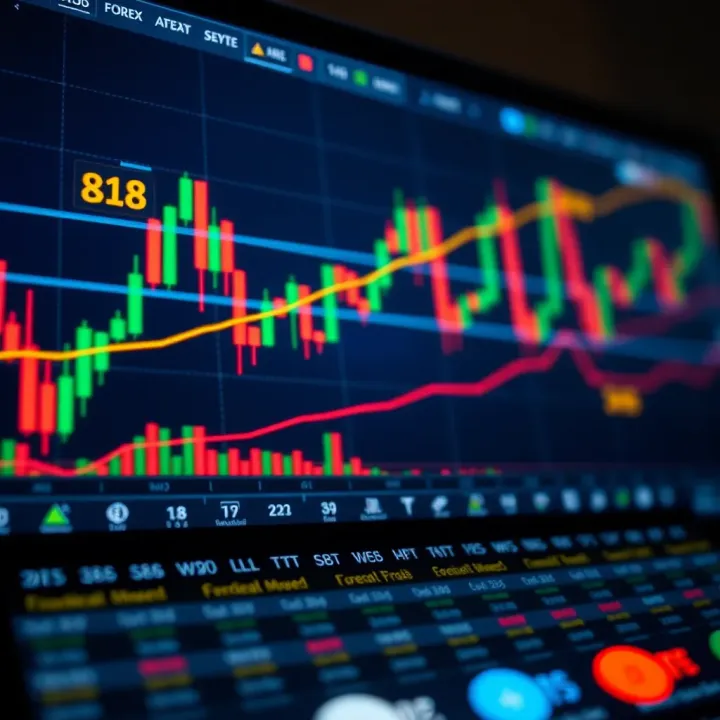
📈 Master forex trading with practical tips on market basics, technical analysis, risk control, and mindset—designed for Nigerian traders aiming for success.
💹 Explore forex trading basics in Nigeria: understand currency pairs, market players, strategies, and risk management for smarter investments! 📈
Explore how Nigerian investors can benefit from forex trading 🌍. Learn about its high liquidity, market access, flexibility, and what sets it apart from other investments 📈.
Based on 9 reviews