
Guide to Candlestick Patterns for Traders
📊 Discover key candlestick patterns in trading, how to read market moves effectively, and make smarter decisions with this detailed guide.
Edited By
Thomas Grant
Japanese candlestick patterns provide traders a clear visual of price action over a set period. Unlike simple line charts, candlestick charts package information about opening, closing, highest, and lowest prices in single bars. This makes them valuable tools to predict market direction — whether prices will rise, fall, or pause.
Originating from Japan’s rice trading markets, these candlestick charts have found worldwide use, including among stock, forex, and commodity traders in Nigeria. Traders here rely on them to navigate local exchanges like the Nigerian Stock Exchange (NGX) as well as global markets.
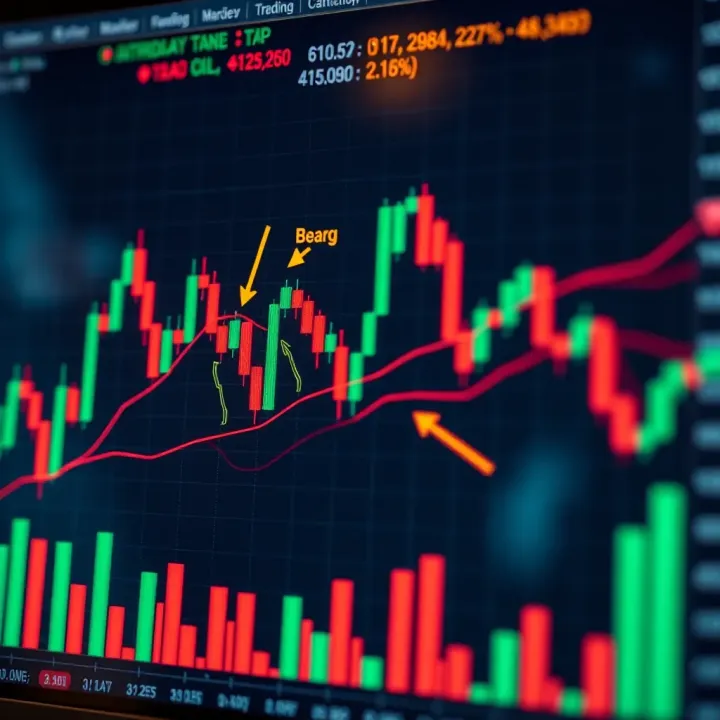
Each candlestick has a body and wicks (sometimes called shadows). The body reflects the difference between the opening and closing prices. When the closing price is higher than the opening, it typically forms a bullish (rising) candle, often shown in green or white on many platforms. Conversely, a bearish (falling) candle appears when the closing price is lower than the opening, usually coloured red or black.
Candlestick patterns form when traders spot sequences that hint at trend reversals or confirmations. For example, a "Hammer" appears after a downtrend and suggests a possible price rebound. Its long lower wick indicates sellers pushed prices down, but buyers regained control by close. This pattern is relevant for NGX traders watching stocks like Dangote Cement or Zenith Bank, especially during volatile market periods.
Other common patterns include:
Engulfing patterns: Where one candle fully covers the previous candle’s body, indicating a strong shift in momentum.
Doji candles: Where opening and closing prices are nearly the same, signalling market indecision.
Morning Star and Evening Star: Three-candle patterns signalling potential reversals from bearish to bullish or vice versa.
Understanding these patterns sharpens your trading edge by showing not only price levels but also trader sentiment. For Nigerian traders, this adds depth beyond just charts, particularly amid unpredictable market swings influenced by naira fluctuations and economic news.
Learning to read these patterns also requires pairing them with other indicators like volume or moving averages. No pattern guarantees success alone. Yet, these visual cues help traders make informed decisions rather than relying on guesswork alone.
To start applying Japanese candlesticks in your trading, focus on recognising the basic patterns mentioned here. Test them on demo accounts, or with small trades involving local equities or forex pairs like USD/NGN. Over time, this skill becomes a practical tool to boost your market clarity and trading discipline.
This section lays the groundwork. Next, we will examine specific candlestick patterns in detail and how you can integrate them into your Nigerian trading environment.
Understanding Japanese candlestick charts is essential for traders looking to decode market movements with precision. These charts offer a visual summary of price action within a specific period, helping traders identify potential reversals, continuations, and market sentiments. For example, a trader following NGX shares can use candlestick patterns to decide when to buy or sell, aligning decisions with observable price behaviour rather than relying solely on intuition.
Grasping the basics of these charts lays the foundation for interpreting more complex patterns, making your trading approach sharper and more informed. It’s not just about spotting bullish or bearish signals; recognising subtle details in the candlestick formation can give you an edge in volatile Nigerian markets where price swings happen severally in a day.
The Japanese candlestick charting method began in the 18th century, thanks to a rice trader named Munehisa Homma. He developed these charts to track the price fluctuations of rice in the Osaka market. His approach was revolutionary at the time because it captured not just price levels but also market psychology — reflecting the emotions of buyers and sellers.
This agricultural heritage matters because it shows the candlestick method’s roots in practical trading, not just abstract numbers. Traders today can appreciate that the patterns represent real human decisions, something especially relevant in markets like Nigerian equities, where investor behaviour heavily influences price movement.
In the late 20th century, the candlestick methodology caught Western traders’ attention after Steve Nison introduced it in his book on technical analysis. From there, it became a global tool used across various markets, from stocks to forex and commodities.
Its worldwide adoption underscores its practical value. Today, platforms like MTN share trading apps or Binance’s crypto interface display candlestick charts as a core feature, allowing Nigerians to tap into global methods while trading local assets. This convergence makes it easy to compare local market trends with international ones in a straightforward manner.
Each candlestick condenses four key price points: the opening price where trading starts in the period, the closing price at the period’s end, plus the highest and lowest prices reached within the timeframe. For example, on a daily chart, a single candlestick shows all these prices for that day’s trading session.
Understanding these components is vital because the difference between open and close indicates whether sentiment was bullish (price closed higher) or bearish (price closed lower). Meanwhile, the shadows or wicks reflect intraday volatility. Traders can spot potential market turning points by noting how these elements interact.
While bar charts also offer price information, candlesticks present it in a more visually accessible way. A candlestick uses a filled or hollow body to depict the relationship between open and close, making it easier to discern trend intensity. Bar charts rely on vertical lines with small horizontal ticks, which might require more effort to interpret quickly.
In busy markets, such as forex trading with naira pairs, the ability to quickly read candlestick colours and shapes helps traders respond faster. This is one reason candlestick charts have become standard on platforms like FXTM and Oanda, especially for active traders who cannot afford to miss brief market swings.
Mastery of Japanese candlestick charts equips you with a practical tool to read and predict market moves. Their historical depth and visual clarity make them indispensable for traders serious about success.
Japanese candlestick patterns are essential guides for traders to interpret price movements and predict market shifts. In trading, recognising these patterns helps make decisions grounded in actual market behaviour rather than guesswork. This section explores key bullish, bearish, reversal, and continuation patterns, explaining their practical value for traders, especially within Nigeria’s dynamic market environment.
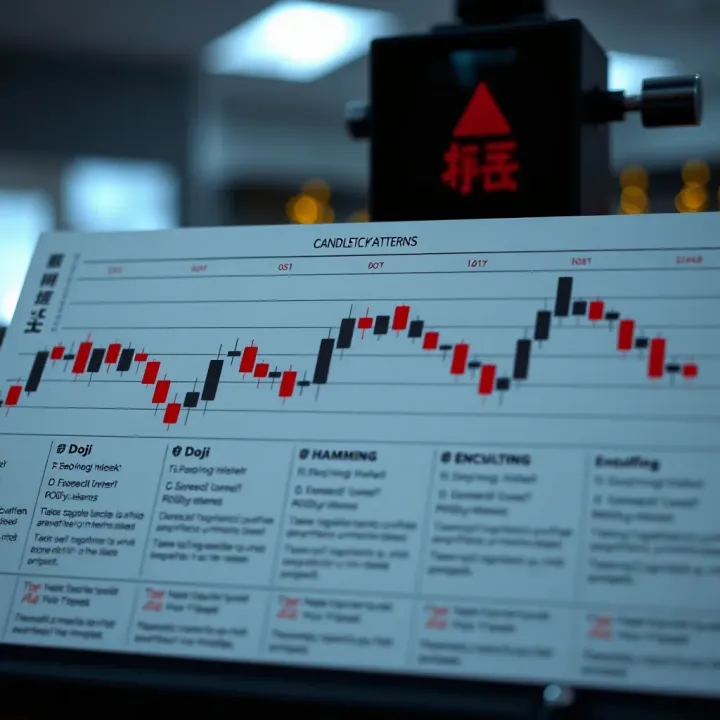
The hammer pattern signals a potential bullish reversal after a downtrend. It features a small body at the top and a long lower shadow, indicating sellers pushed prices down during the session, but buyers fought back strongly. For example, if an NGX stock shows a hammer on its daily chart after consecutive falls, it suggests buying interest is gaining strength, and a price rise could follow.
The morning star is a three-candle pattern signalling a strong bullish turnaround. It starts with a large bearish candle, followed by a small candle that gaps down or shows indecision, then a large bullish candle closing well into the first candle’s body. This pattern reflects a shift from sellers to buyers, making it valuable in spotting trend changes. Nigerian traders often watch for this during volatile ember months when market sentiment shifts rapidly.
This pattern occurs when a smaller bearish candle is completely engulfed by a larger bullish candle. It indicates aggressive buying activity and potential upward momentum. For example, a bullish engulfing pattern forming after a downtrend in a forex pair like USD/NGN may suggest a bounce back, making it a timely entry signal.
The shooting star shows a potential bearish reversal after an upward move. It has a small body near the low of the session, with a long upper shadow showing rejection of higher prices. For traders, spotting a shooting star on a cryptocurrency chart during a run-up may signal an impending drop, warning them to take profits or tighten stop-loss levels.
An evening star is the bearish counterpart to the morning star, comprising three candles: a strong bullish candle, a small indecisive candle, then a long bearish candle. It warns that buyers are losing control and sellers might take over. This is crucial for Nigerian traders who often face sudden market reversals in stocks influenced by local news and policy changes.
This pattern appears when a small bullish candle is completely swallowed by a larger bearish candle. It signals a shift towards selling pressure and potential decline. For forex traders dealing with naira pairs, recognising bearish engulfing can help avoid losses by exiting trades early.
A doji forms when opening and closing prices are virtually the same, creating a cross-like candle. It represents market indecision, and its significance depends on prior trends. After a strong uptrend, a doji might suggest slowing momentum and a possible reversal, prompting traders to watch carefully for confirmation signals.
The spinning top resembles a doji but has a small body with upper and lower shadows, showing indecision with slightly more trading activity. It signals uncertainty among buyers and sellers and often appears before a turnaround. In Nigerian markets known for sudden swings, spotting spinning tops can alert traders to be cautious.
This pattern consists of three consecutive long bullish candles with progressively higher closes, indicating sustained buying pressure. It's a strong sign of an uptrend continuation. For instance, in Nigerian shares showing this pattern, traders may increase positions expecting further gains.
Conversely, three black crows are three successive bearish candles signalling consistent selling pressure. It often forecasts downtrends. When this appears on a crypto chart during bearish sentiment, it alerts traders to reduce exposure or consider short positions.
Recognising these candlestick patterns accurately allows traders to anticipate possible market turns and better time their trades. Combined with other technical tools, they provide a practical edge in navigating the Nigerian and global markets.
By understanding these patterns, you increase your chances to spot demand and supply shifts early, making informed decisions rather than reacting to emotions or rumours. This is especially useful in markets like Nigeria where volatility is a frequent companion.
Candlestick patterns serve as visual indicators that reflect the ongoing battle between buyers and sellers in the market. Reading these patterns helps traders gauge market sentiment—the general attitude or feeling of investors towards an asset. Understanding this sentiment is key to making informed decisions, especially in volatile markets like Nigeria’s, where local events and global trends frequently impact price movements.
Spotting bullish or bearish reversals early can save traders from losses and open doors to profiting at the right time. A bullish reversal signals that the market might be shifting from a downtrend to an uptrend, while a bearish reversal suggests the opposite.
For example, a Hammer candle after a declining price shows that sellers pushed prices down during the session, but buyers regained control by the close. This often indicates that the downward momentum is weakening, signalling a buying opportunity. Conversely, a Shooting Star appearing after a price rally reflects selling pressure, hinting at a forthcoming price drop.
However, relying on one candlestick alone can be risky. Confirmation from the following candles—like closing prices higher than the Hammer’s close—adds weight to the reversal signal. This practical approach reduces false positives and improves timing.
Besides price action, traders benefit from using volume and other technical indicators to confirm reversals. Rising volume during a reversal pattern confirms genuine market interest rather than random price moves. Combining candlestick signals with indicators like the Relative Strength Index (RSI) or Moving Average Convergence Divergence (MACD) can highlight overbought or oversold conditions, reinforcing the reversal case.
Candlestick patterns also help identify whether an existing trend will continue. Patterns such as Three White Soldiers (three consecutive bullish candles with higher closes) or Three Black Crows (its bearish counterpart) show strong momentum in the prevailing direction.
Recognising these steady-trend patterns lets traders stay on the right side of the market instead of jumping prematurely into counter-trends. This is particularly useful when trading Nigerian equities or forex pairs where trends can persist despite short-term volatility.
Alongside pattern recognition, applying candlestick signals with trend lines adds clarity. If an uptrend line remains intact and is accompanied by bullish candlesticks, it increases confidence that the trend will hold. Likewise, a break below a support line followed by bearish patterns can confirm a downtrend continuation.
Always combine candlestick patterns with other technical tools and market context to improve reliability. This layered approach helps Nigerian traders navigate the complexities of both local and international markets effectively.
By mastering how to read market sentiment through candlestick patterns, traders can better time entries and exits, avoid traps, and improve their overall trading success.
Using Japanese candlestick patterns in Nigeria’s trading environment brings real benefits but also some challenges. These patterns are valuable tools for analysing price movements and market sentiment, helping traders make informed decisions. However, understanding their practical relevance in both local and international markets sharpens their effectiveness.
Trading on the Nigerian Exchange Group (NGX) can benefit significantly from candlestick analysis. Many Nigerian traders use these patterns to identify price trends and possible reversals in stocks such as Dangote Cement, MTN Nigeria, or Access Bank. For example, spotting a hammer or bullish engulfing on these stocks might indicate a good entry point after a period of decline. Integrating candlestick patterns with volume data and broader market news helps to improve timing and reduce risks.
That said, the Nigerian stock market faces challenges from volatility and liquidity issues which sometimes limit the reliability of candlestick signals. Some stocks may trade thinly, causing erratic price movements that can generate false signals. For instance, smaller companies or less active sectors often see sudden price spikes unrelated to fundamentals, making it tricky for traders relying solely on patterns. Understanding this helps traders avoid overinterpreting signals without backing from other indicators or market context.
In forex, Nigerian traders find opportunities by focusing on naira currency pairs like USD/NGN or GBP/NGN. Candlestick patterns here assist in spotting short-term shifts driven by economic announcements, CBN policies, or forex market sentiment. Since forex markets are more liquid and active, patterns tend to offer more reliable clues compared to some local stocks.
Meanwhile, cryptocurrency trading platforms popular in Nigeria such as Binance and Luno allow the use of candlestick charts for pairs involving Bitcoin, Ethereum, or stablecoins paired with naira. These platforms offer more continuous trading across 24 hours, making candlestick patterns useful for timing entry and exit points. Still, crypto’s high volatility means traders should confirm patterns with other tools like volume trends or RSI to avoid premature decisions.
Candlestick patterns are valuable in Nigerian markets but work best when combined with local market understanding and other analysis tools.
To sum up, applying Japanese candlestick patterns in Nigeria requires adapting to the unique behaviours of NGX stocks and popular trading markets. Traders benefit most by treating candlestick insights as part of a wider toolkit that respects local market conditions and the realities of volatility and liquidity.
Mastering Japanese candlestick patterns can improve your trading decisions, but practical tips make all the difference in applying these patterns successfully. Traders who combine candlestick signals with other technical tools tend to spot more reliable entry and exit points. Equally important is recognising common pitfalls that can lead to costly mistakes, especially in volatile markets like Nigeria’s.
Trusting a single candlestick pattern without confirmation is risky. For instance, a bullish engulfing pattern signals potential upward movement, but if volume is low or conflicting indicators suggest weakness, the pattern could be a false signal. Confirmation from volume trends or another indicator helps to filter such misleading signs, reducing the chance of entering a trade prematurely.
Moving averages smooth price data and highlight the overall trend direction. Using them with candlestick patterns provides clearer insights. For example, spotting a hammer candlestick near the 50-day moving average can indicate stronger support than seeing the hammer alone. Similarly, the Relative Strength Index (RSI) can identify whether an asset is overbought or oversold. When an oversold RSI coincides with a bullish candlestick pattern, these tools together offer a more convincing buy signal.
Candlestick patterns must not be used in isolation. Relying on one pattern without factoring in other market dynamics often leads to poor trades. For example, a doji candlestick can indicate indecision, but if market news favours a strong continuation of a trend, ignoring that context may cause you to miss profitable moves or exit too early.
Candlestick patterns reflect price action but don’t capture everything. Market-moving news, economic reports, or sudden political developments frequently affect prices regardless of chart patterns. Nigerian traders should especially watch for events like CBN policy announcements or oil price shifts, as these can override technical signals. Always consider the broader market environment before acting on candlestick patterns.
Practical application demands combining candlestick patterns with confirming tools and awareness of market context. This approach helps improve accuracy and avoids costly mistakes.
By integrating these practical tips, Nigerian traders can sharpen their strategies and better navigate both the NGX and volatile forex or cryptocurrency markets. Always confirm patterns, watch for key technical levels, and stay updated on market news to trade with greater confidence and success.
📊 Discover key candlestick patterns in trading, how to read market moves effectively, and make smarter decisions with this detailed guide.
📉 Learn how bearish reversal candlestick patterns work in trading. Spot key signals, assess their reliability, and combine with other tools for smarter trades.
📉 Learn to spot and use bearish candlestick patterns in trading. Understand market signals and make smarter trading decisions in Nigeria and beyond.
Discover how to pick the best trading app in the world 🌍 tailored for Nigerian users. Learn about key features, fees, security, and ease of use to trade smartly 📈💼.
Based on 7 reviews