
Forex Trading Basics: A Practical Nigerian Guide
📊 Learn forex trading basics with this practical PDF guide for Nigerian traders. Understand currency markets, risk management & start trading confidently today!
Edited By
Charlotte Price
Trading forex (foreign exchange) has gained serious attention among Nigerians looking to multiply their income or diversify their investment portfolios. At its core, forex trading is the act of buying and selling currencies in pairs, aiming to profit from the fluctuating exchange rates. But unlike just guessing the market, it requires clear understanding of how the forex market operates, how to manage risks, and how to use reliable tools.
The forex market is the world's largest financial market, with a daily trading volume exceeding $6 trillion. For Nigerians, it offers access to global money flows and opportunities beyond the local economy. However, beginners often get overwhelmed by complex jargon and the handful of scams out there. That's why starting with a solid foundation is crucial.
To keep things simple and practical, here are some fundamentals every beginner should grasp:
Currency Pairs: Forex trades happen between two currencies, like USD/NGN or EUR/USD. You buy one currency and sell the other simultaneously.
Leverage: Brokers offer leverage that lets you control larger positions with smaller funds. While this can magnify profits, it can just as easily increase your losses.
Pip: This is the smallest price move a currency pair can make, important for calculating trade gains or losses.
Spread: The difference between the buying and selling price; narrower spreads often mean better trading conditions.
Getting started safely means choosing a trustworthy broker with transparent fees and proper regulation. Beware of flashy promises or peer pressure to invest quickly; take time to learn and practice with demo accounts.
Successful forex trading hinges on informed decisions, patience, and discipline. Without these, even the best strategies can falter.
In this guide, we'll cover how to pick a broker, basic strategies tailored for Nigerian traders, risk management essentials, and how to avoid common traps. Whether you are a student with little capital or an investor looking to add foreign currencies to your portfolio, the steps here will help you trade smart and build confidence.
Starting forex trading is like learning to ride an okada in Lagos traffic—it looks risky at first, but with patience and skill, you can navigate smoothly and get to your destination profitably.
Grasping the fundamentals of forex trading is essential for anyone stepping into the currency market. These basics provide the key building blocks that help you navigate the often fast-moving and volatile environment of forex trading with confidence. Without this foundation, making informed decisions or understanding market behaviour becomes guesswork.
Forex trading, simply put, is the buying and selling of currencies. It’s the largest financial market in the world, operating 24 hours daily across different time zones. The main goal is to profit from fluctuations in currency exchange rates. For example, if you expect the US dollar (USD) to strengthen against the Nigerian naira (₦), you might buy USD/NGN pairs hoping to sell later at a higher price.
Currencies circulate globally through millions of transactions involving businesses, governments, investors, and speculators. This constant exchange affects economies and trade balance, making forex trading highly relevant for global commerce as well as individual investors.
Forex pairs represent two currencies traded against each other, such as EUR/USD or USD/NGN. The first currency is the base, and the second is the quote currency. Understanding these pairs helps you track which currency you’re buying or selling.
Pips and lots are the units of measurement in forex. A pip typically refers to the smallest price change in a currency pair, often 0.0001. Lots denote the volume of trade; a standard lot is 100,000 units of the base currency, while mini and micro lots are smaller, suitable for beginners.
Leverage and margin let traders control larger trade sizes than their deposit would allow. For example, with 1:100 leverage, ₦10,000 can control ₦1,000,000 worth of currency. While this can amplify gains, it equally increases risk, so managing leverage wisely is key.
Bid and ask prices show the price at which you can sell (bid) or buy (ask) a currency pair. The difference between these, called the spread, is effectively the broker’s fee. Tight spreads are preferable for cost-effective trading.
The forex market follows global business hours divided into sessions: Asian, European, and American. Market activity peaks during overlapping sessions, offering higher liquidity and potentially better trading opportunities. For Nigeria-based traders, the European and American sessions often coincide with convenient times.
Banks, brokers, and traders each play distinct roles. Banks handle massive currency flows for clients and themselves, setting the prices that brokers provide to retail traders. Brokers act as intermediaries, offering platforms and access to the market. Your role as a trader involves analysing this flow, using tools and strategies to decide when to enter or exit trades.
Understanding these fundamentals reduces guesswork and arms you with the knowledge needed to trade forex wisely. It’s not just about the money; it’s about making sense of a global financial system that affects everyday lives and businesses.
Beginning your forex trading journey is the first real step to turning your interest into potential profit. Showing careful consideration right at this stage helps avoid costly mistakes later. From picking a reliable broker to setting up your account and using the right tools, each move affects how smoothly you trade and how much you stand to gain.
Selecting a trustworthy forex broker matters as much as understanding the market itself. Look out for brokers regulated by reputable authorities like the Financial Conduct Authority (FCA) or the Nigerian Securities and Exchange Commission (SEC). Regulation keeps brokers in check and protects your funds. Also, check the fee structure. Some brokers might lure you with low spreads but charge high commissions, which can eat into your profits.
Trading platforms should be user-friendly and stable. MetaTrader 4 and 5 remain popular because they offer reliable execution and a wide range of tools. For Nigerians, brokers like FXTM, HotForex, and Exness are often accessible, regulated, and support local funding options. These brokers also provide customer support tailored to the Nigerian market, which is a major plus.
Forex brokers typically offer different account types: standard, mini, and micro accounts. Beginners often start with micro accounts, allowing smaller investment amounts and lower risk. Standard accounts suit those with more capital ready to trade larger volumes. Choose an account based on your budget and trading goals.
The registration process usually involves submitting identification documents to comply with Know Your Customer (KYC) rules. This might include your National Identification Number (NIN), passport or driver's licence, and proof of residence. Registration is straightforward and mostly online, requiring you to fill personal details, verify your identity, and create security details.
Funding your account from Nigeria is easier nowadays with payment methods like bank transfers, USSD codes, and payment platforms like Paystack and Flutterwave integrated by many brokers. Avoid brokers that require complicated or expensive international wire transfers. Funding should be quick, affordable, and secure.
MetaTrader 4 (MT4) and MetaTrader 5 (MT5) are essential for new traders. They offer charting, analysis, and automated trading capabilities all in one place. MT5 is the newer version with extra features but MT4 remains the most popular globally due to its simplicity.
Mobile trading apps are vital for traders who can’t be tied to a laptop. Brokers now offer apps compatible with Android and iOS. These apps allow you to monitor the market, place trades, and manage your account on the go. For example, the Exness app carries real-time quotes and swift execution, ideal for Nigeria’s busy traders.
Charting and analysis tools give you the edge to spot opportunities. Basic tools include Moving Averages, RSI (Relative Strength Index), and Fibonacci retracements. By mastering these, you get clues on when to enter or exit trades. Modern platforms offer free access to these indicators plus news feeds and economic calendars, which are handy for keeping up with market-moving events.
Starting your forex journey with good choices in brokers, account setup, and tools not only builds confidence but also sets a solid foundation for profitable trading ahead.
Starting forex trading without a strategy is like driving blindfolded—you might go somewhere, but not where you want. For beginners, having clear, basic strategies is essential to navigate the market effectively and reduce costly mistakes. These strategies help you understand when to buy or sell, manage risks, and recognise market behaviour systematically.
Charts are the bread and butter of forex trading. They show price movements over time, making trends visible. Indicators like moving averages or the Relative Strength Index (RSI) add another layer by highlighting momentum or overbought and oversold conditions. For instance, if the 20-day moving average crosses above the 50-day moving average, it might signal an uptrend starting.
Using these tools can guide your decisions rather than guessing. For example, a trader looking at EUR/USD might see a support level forming at 1.1500 and an RSI below 30, suggesting the price is oversold and may bounce back.
Certain shapes appear on charts more often and tell traders what price might do next. Patterns like 'head and shoulders,' 'double tops,' or 'flags' are popular. A double top pattern, where price hits a high twice before falling, warns of a possible reversal. Suppose you notice this pattern on GBP/USD near 1.3800; it may be time to consider selling.
Recognising patterns requires practice but helps spot higher-probability trades. Instead of reacting to every price flicker, you focus on bigger market moves.
Economic reports shape currency values. Key indicators include Nigeria's inflation rate, US Non-Farm Payrolls, or Eurozone GDP figures. For Nigerian traders, watching the Central Bank of Nigeria’s (CBN) monetary policy rate can signal naira strength or weakness.
For example, if the CBN raises interest rates, the naira might gain because higher rates attract investment. Traders often use such news to anticipate currency moves rather than relying solely on past price data.
Beyond numbers, geopolitical events, election results, or trade talks affect forex markets. Imagine a surprise fuel subsidy removal in Nigeria causing naira volatility. Traders following news can quickly adjust their positions. A Facebook post or government statement can move prices within minutes, so being alert is vital.
Timely access to reliable news, such as from Reuters or Bloomberg, helps you stay ahead in volatile conditions.
These are your safety nets. A stop-loss order limits how much you lose if the market moves against you. For instance, if you buy USD/NGN at 410 and set a stop-loss at 405, the trade exits automatically if the price falls to 405, capping your loss.
Take-profit works the same but locks in gains when price hits a target. This discipline prevents emotional decisions, which often lead to bigger losses or missed profits.
Knowing how much to trade per position keeps your account safe. A general rule is to risk no more than 1-2% of your trading capital on one trade. If your account has ₦100,000, risking 1% means you allow ₦1,000 loss max.
Calculating position size involves understanding pip values and your stop-loss distance. For example, if your stop-loss is 50 pips away and each pip is worth ₦200, a 1% risk means you can trade 10 lots (₦200 × 50 pips × 10 lots = ₦100,000), but this is usually too big for a small account. Adjust accordingly to avoid risking too much.
A solid trading strategy blends technical tools, fundamental insights, and risk controls. It’s not about predicting the market perfectly but managing risks and making informed choices.
Master these basics and you build a firm foundation for more advanced forex trading skills.
Trading forex in Nigeria comes with unique challenges that can disrupt even the best-laid plans. Understanding these hurdles and finding ways around them is essential for anyone serious about the market. From currency swings to unreliable power, each issue can quietly erode trading capital or stunt progress if ignored.
The naira’s frequent swings against major currencies affect traders harshly. For instance, if you fund your forex account with naira and then the currency depreciates suddenly, your effective trading capital shrinks. This means even profitable trades may not cover losses from currency conversion. Many Nigerian traders wake up to such surprises especially during ember months when fluctuations worsen due to increased demand for foreign exchange.
To reduce this risk, some traders prefer using accounts funded in stable currencies like the US dollar or euro. By holding funds in these currencies, you can protect your capital from naira depreciation. Using platforms that support funds in multiple currencies, or employing reliable third-party wallets, can help you keep your buying power steady and focus more on trading strategy than worrying about forex rate impacts.
A disruption in internet connectivity during a trade can cost dearly. Lagos and other big cities offer several internet service providers, but quality varies widely. ISPs like MTN, Airtel, or Smile 4G tend to provide better stability for traders. Many switch between multiple providers or use data bundles from different networks to avoid sudden downtime.
Frequent power outages remain a headache for traders. Investing in reliable backup power — such as inverters paired with deep-cycle batteries or a small generator — ensures uninterrupted access to trading platforms. Some traders even keep a UPS (Uninterruptible Power Supply) on their routers and computers to prevent immediate disconnections during power dips. This preparation saves time and stress, letting you act on market moves without delays.
Scammers often promise unrealistically high returns with zero risk or push unsolicited adverts via social media. Be wary of brokers demanding huge upfront payments or those that lack transparent terms on withdrawals and fees. If customer reviews are mostly negative or the broker refuses to provide verifiable contacts, those are definite warning signs.
Always expect proper disclaimers and clear communication from your broker. Missing these usually means you should steer clear.
Before committing funds, check if your broker is licensed by reputable regulators such as the Securities and Exchange Commission (SEC) Nigeria or internationally recognised bodies like the Financial Conduct Authority (FCA) UK. Regulation ensures some level of oversight and dispute resolution options. Nigerian traders should prioritise brokers registered with the SEC Nigeria to avoid falling victim to fraud or unauthorised operations.
Addressing these challenges head-on will give you a stronger footing in the forex market. It’s not just about making trades, but trading smart within a tough local environment.
📊 Learn forex trading basics with this practical PDF guide for Nigerian traders. Understand currency markets, risk management & start trading confidently today!
📈 Learn forex trading basics for Nigerian traders. Understand key terms, markets, strategies, risks, and essential tools to kickstart your trading journey today!
📈 Discover the best time for forex trading in Nigeria! Learn how market hours, currency behaviors, and economic news can boost your trading strategy. ⏰💹
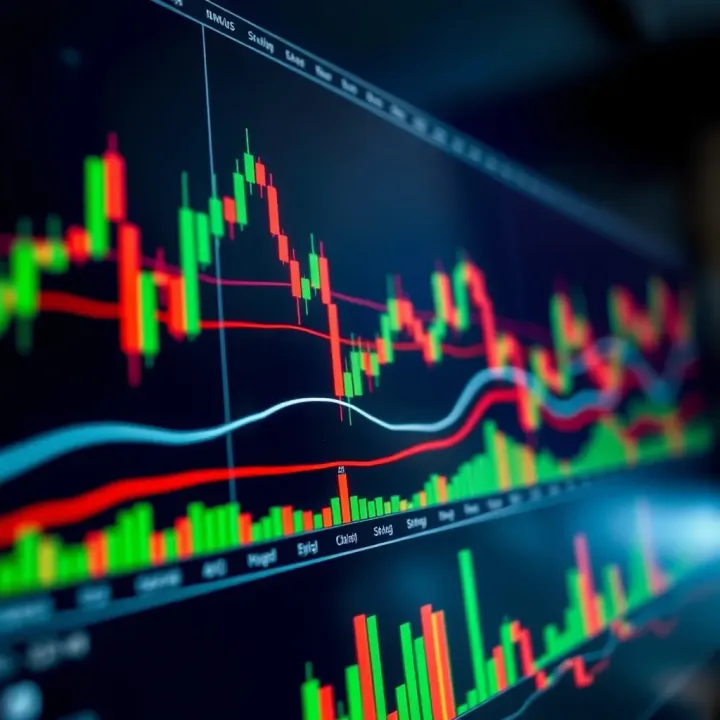
📈 Discover effective forex trading strategies tailored for Nigerian traders. Learn how to manage risks, use technical & fundamental methods, and tackle common challenges.
Based on 13 reviews