
Essential Forex Trading Techniques for Nigerian Traders
Master essential forex trading techniques tailored for Nigerian traders 🇳🇬. Learn strategies, risk management, tools, and avoid pitfalls amidst naira volatility 💹.
Edited By
William Carter
Forex trading often raises the question: is it just another form of gambling? This doubt is common among Nigerian traders, especially those new to the market or have heard stories of quick wins and losses. To clear the air, it's crucial to understand the difference between trading and gambling.
Gambling generally means staking money on an unpredictable outcome where chance dominates, like playing the lottery or betting on football matches without any real strategy. Forex trading, while risky, involves analysing market data, using proven strategies, and managing risks to increase the chance of profit.
For example, a Nigerian trader might use economic reports from the Central Bank of Nigeria (CBN), currency trends, and global news before choosing to buy or sell US dollars against the naira. This approach is far from random luck—it is based on informed decision-making.
Clear understanding and discipline separate successful forex traders from gamblers.
That said, the forex market is volatile and can feel like a gamble if approached recklessly. Many beginners jump in with little knowledge and no strategy, ending up losing their capital just like in gambling. The key difference is preparation: gambling relies on chance, trading relies on skill, experience, and risk control.
Here are some practical points Nigerian traders should keep in mind:
Education matters: Learn how the forex market works, know key terminology like lots, pips, leverage, and spreads.
Strategy is vital: Use tested trading methods rather than guessing. For instance, technical analysis or fundamental analysis help pinpoint entry and exit points.
Risk management: Never risk more than a small percentage of your trading capital on one trade to avoid wiping out your account.
The naira's fluctuations, fuel price changes, and global events impact forex trading daily, so staying informed about Nigerian economic conditions is essential.
In summary, forex trading is not gambling when done cautiously and professionally. It offers opportunities for profit but demands prudence, planning, and ongoing learning. Nigerian traders who adopt this mindset can trade with confidence and avoid misconceptions that forex is just a game of chance.
Forex trading involves buying and selling currencies on the global foreign exchange market, which is the largest financial market worldwide. In simple terms, traders exchange currency pairs like the US dollar against the euro (USD/EUR) aiming to profit from price fluctuations. Each pair reflects how much one currency is worth in terms of another.
Understanding forex trading begins with grasping the concept of currency pairs. For example, when a Nigerian trader buys USD/NGN, they are purchasing US dollars using Nigerian naira, expecting that the value of the dollar will increase compared to the naira. This practical knowledge helps traders make informed decisions rather than relying on guesswork.
The foreign exchange market operates 24 hours across major financial hubs like London, New York, and Tokyo. Globally, it facilitates international trade, investment, and travel by enabling currency conversion. In Nigeria, forex plays a vital role because businesses import goods and services, requiring foreign currencies. Traders also participate actively, influencing the local foreign exchange dynamics beyond the official rates set by the Central Bank of Nigeria (CBN).
Forex trading is the act of speculating on the price movements of currency pairs. Unlike the stock market that deals with company shares, forex focuses solely on currencies. Traders look to take advantage of short-term price swings or longer trends to buy low and sell high.
Currency pairs consist of a base currency and a quote currency. If the base currency strengthens against the quote currency, the pair’s value rises; if it weakens, the value falls. For example, if the USD/NGN moves from ₦720 to ₦730, the dollar has become more expensive relative to the naira.
People trade forex mainly for two purposes: speculation and hedging. Speculators aim to profit from price changes by buying or selling currencies expecting favourable moves. For instance, a trader might speculate that the euro will appreciate against the dollar due to changing economic data and decide to buy EUR/USD.
Hedging, on the other hand, serves as insurance against currency risk. Businesses involved in cross-border trade may lock in exchange rates to protect themselves from sudden adverse currency movements. For example, a Nigerian exporter expecting payment in dollars might hedge against naira depreciation to ensure stable revenue when converting funds back into naira.
Forex trading offers several advantages compared to other forms of investment. Its high liquidity means traders can enter and exit positions quickly, often with low transaction costs. The market’s round-the-clock availability enables trading flexibility beyond Nigerian business hours.
Many Nigerian traders engage in forex hoping to supplement income, diversify investment portfolios, or capitalise on market opportunities amidst naira depreciation. That said, successful trading requires knowledge, discipline, and proper risk management rather than pure luck.
Knowing what forex trading is and why people do it sets the groundwork to distinguish it clearly from gambling. It allows Nigerian traders to approach the market with realistic expectations and informed strategies.
Understanding the difference between forex trading and gambling is essential for Nigerian traders to approach the foreign exchange market confidently and responsibly. This distinction clarifies that forex trading is not about pure chance or luck, but rather about applying skills and strategies amid calculated risks. Knowing the difference helps avoid misconceptions, reduces impulsive decisions, and encourages the use of proper risk management.

Forex trading demands a fair share of technical knowledge, strategy, and experience. Traders study charts, economic indicators, and news events to predict currency movements. For instance, a trader anticipating a naira depreciation will analyse Central Bank of Nigeria (CBN) policies, crude oil prices, and political developments before entering a trade. This analysis informs decisions, making trading less of a gamble and more of a calculated activity.
Traders also develop strategies based on past market behaviour and adapt when conditions change. Unlike gambling, where outcomes rely mostly on chance, forex trading rewards those who invest time learning how markets work and how to manage risks properly.
Gambling is dominated by luck and random outcomes. When playing roulette or betting on horses, players have no control over results, and odds generally favour the house. In contrast, forex trading is about taking calculated risks. Traders know that losses are part of the game but manage these with stop-loss orders and position-sizing to limit their downfall.
Practical risk management involves adjusting trade sizes based on capital and setting clear exit points, unlike gambling where risk is unpredictable. While markets can be volatile, a trader’s decisions still shape outcomes, setting forex apart from pure chance activities.
Some Nigerians see forex trading as gambling because both involve risking money with uncertain outcomes. Stories of people losing ₦500,000 or more on quick trades without strategy fuel this view. The fast-paced nature and possibility of sudden losses create an illusion of randomness, much like betting on a game.
Moreover, unofficial and unregulated trading platforms often contribute to this confusion. Many 'get-rich-quick' schemes allegedly linked to forex spread unrealistic promises, which resemble gambling’s speculative nature more than genuine trading.
The belief that forex trading is gambling often stems from inadequate education. Many beginners jump in without grasping basic concepts like currency pairs, leverage, or market hours. This leads to poor choices, impulsive decisions, and heavy losses, reinforcing the misconception.
For example, a new trader who places a large bet on a currency pair after hearing a tip from a friend, without understanding the market, is effectively gambling. The absence of proper training and critical thinking blinds many, but with adequate knowledge and training, forex trading becomes a disciplined financial activity rather than a game of chance.
Traders who approach forex with understanding and strategy build resilience, whereas those without knowledge risk losing money and confusing trading with gambling.
By clearly distinguishing trading from gambling, Nigerian investors can make wiser decisions and avoid falling into common traps in the forex market.
Understanding the risks in forex trading is essential for Nigerian traders aiming to decide whether it resembles gambling. While both carry risks, forex trading’s risks come with mechanisms that offer some control, unlike gambling’s largely unpredictable nature.
The forex market is well-known for its volatility. Currency prices can jump or drop sharply in minutes due to global economic news, geopolitical events, or changes in Central Bank policies like those of the Central Bank of Nigeria (CBN). This market volatility can quickly affect traders' positions. Added to this is leverage — a tool allowing traders to control large sums with a smaller capital amount. For example, a 50:1 leverage lets you trade ₦50 million while only risking ₦1 million upfront. This can magnify profits but also sharpens losses in the same way, risking more than your initial investment if not managed properly.
To manage these risks, Nigerian traders use various tools and practices. Stop-loss orders automatically close positions once losses hit a predefined level, preventing further damage. Position sizing helps traders decide how much money to risk on a trade relative to their total capital. Traders often combine technical and fundamental analysis to make more informed decisions instead of relying on guesswork. Also, practising with demo accounts before risking real money builds confidence and helps test strategies without financial consequences.
Gambling’s core risk sits in its unpredictability and odds that are often stacked against the player. Whether it’s betting on football matches or playing casino games, the outcomes depend heavily on chance. The odds are fixed and designed to favour the house or bookmaker long-term. Unlike forex trading, where analysis can influence risk decisions, gambling’s unpredictability leaves players exposed to unexpected outcomes without tools to limit losses.
Moreover, gamblers have no control over the event's result—whether a dice roll or a roulette spin. The results are entirely random, with no way to influence or predict them reliably. This lack of control means that a gambler’s chances don’t improve with experience or study. Conversely, forex trading rewards knowledge, discipline, and risk management, highlighting a fundamental difference between the two activities.
While both forex trading and gambling carry financial risks, forex trading offers structured ways to manage and reduce those risks through skill, strategy, and proper tools, whereas gambling depends mostly on chance with little to no control over outcomes.
By recognising these distinctions, traders in Nigeria can approach forex trading more thoughtfully and avoid confusing it with gambling. Practising responsible trading and mastering risk control are keys to navigating the forex market safely.
For Nigerian traders, stepping into forex trading demands more than just capital. It requires a strong foundation in education, risk management, and choosing the right broker. Taking responsible steps can make the difference between steady growth and reckless losses.
Learning basic forex concepts and technical analysis is the first step. Understanding how currency pairs move, what influences their values, and the basics of chart reading allows you to spot opportunities rather than guess blindly. For example, knowing the impact of Nigeria’s Central Bank decisions or global political events helps traders anticipate market movements with more confidence.
Besides fundamental knowledge, technical analysis teaches traders to interpret price patterns, support and resistance levels, and momentum indicators. With these skills, Nigerian traders can craft strategies instead of relying on gut feeling. Tackling this learning phase seriously reduces the chances of impulsive trades driven by excitement or hearsay.
Using demo accounts to practice without financial risk is equally vital for developing skill and confidence. Most reputable forex platforms offer demo accounts where you trade virtual money in live market conditions. This enables you to test strategies, understand platform tools, and experience the emotional swings of trading without risking your hard-earned ₦.
For instance, a trader in Lagos could try different trading styles on a demo account before committing real funds. This trial phase helps spot mistakes early on while allowing one to learn from market moves, sharpening decision-making abilities.
Setting realistic goals and trading limits keeps your forex journey grounded. Many Nigerian beginners fall into the trap of expecting quick riches and end up risking too much per trade. Instead, setting clear daily or weekly loss limits prevents wiping out capital during volatile periods. Realistic profit targets also help maintain patience and avoid chasing unlikely gains.
Using stop-loss orders and position sizing protects your investment systematically. A stop-loss automatically closes a trade at a predetermined loss level, so you don’t expose yourself to unlimited downside. Coupled with position sizing—adjusting trade size based on your account balance—this approach ensures that any one trade won’t take away too much capital.
For example, if you have a ₦100,000 trading account, risking no more than 2% per trade (₦2,000) can make losses manageable and keep you in the game longer. Ignoring such tools often leads to emotional exits or catastrophic losses.
Regulated brokers and checking their credentials must be a top priority. The forex space in Nigeria has seen scams and unlicensed operators. Ensuring your broker is licensed by recognised bodies, such as the Nigerian Securities and Exchange Commission (SEC) or respected international regulators, provides some safeguard.
Deal only with brokers who clearly display their regulatory information and have a transparent business record. It's also helpful to check broker reviews and feedback from other Nigerian traders to avoid unpleasant surprises.
Considerations around costs, platforms, and customer support are crucial for a smooth trading experience. Brokers may charge spreads, commissions, or have withdrawal fees that affect your profitability. Choosing a broker with competitively low fees matters, especially for frequent traders.
The trading platform interface should be user-friendly and stable on devices you normally use—whether a smartphone or laptop. Plus, responsive customer support answering queries promptly is vital, especially for Nigerian traders facing network disruptions or needing prompt trouble-shooting.
Being a responsible trader means continuously learning, managing risks carefully, and aligning yourself with trustworthy brokers. This approach turns forex trading from a risky guesswork into a potentially rewarding endeavour for Nigerians.
To succeed in forex trading, Nigerian traders must balance their expectations with the realities of the market. This means understanding that forex is not a quick way to make money but a skill that requires patience, discipline, and consistent effort. When traders keep their goals realistic, they avoid common mistakes like chasing unrealistic profits or falling into overtrading.
Impulsive decisions in forex often come from chasing losses or sudden excitement about potential profits. This behaviour typically leads to overtrading—making too many trades within a short time without proper analysis. For example, a trader who loses ₦10,000 on one position may rush to open several new trades in hopes of quickly recovering, increasing their exposure to danger. Recognising when emotions override logic is critical. Signs include continuously ignoring a trading plan, making snap decisions based on rumours or social media hype, and feeling anxious or impatient about trades.
A well-prepared trading plan sets clear rules for when to enter and exit the market, along with risk limits. Nigerian traders who stick to such plans generally keep emotions in check and make calculated decisions. For instance, setting daily loss limits prevents draining your trading capital due to rash moves. Discipline means resisting the urge to overtrade even after a string of wins or losses. It also involves reviewing trades regularly to learn what worked and what didn’t, helping to refine strategies over time.
Forex markets in Nigeria, much like global markets, fluctuate with political events, economic data, and global trends. Expecting guaranteed high returns every day is misplaced. Generally, consistent monthly returns between 3–5% are achievable with steady risk management. If you expect to convert ₦100,000 into ₦1 million in a few weeks, you’re likely setting unrealistic goals. Understanding market cycles and volatility helps you measure performance fairly and avoid discouragement when profits don’t come fast.
Losses are inevitable in the forex market. Accepting this fact separates serious traders from gamblers. If a trader approaches every loss as a personal failure, emotions may cloud their judgement and lead to poor choices. Instead, treat losses as learning moments and budget them into your trading plan. For example, if you allocate 2% of your trading capital per trade, even a string of losses won’t wipe you out. Wise traders understand that managing loss is as important as securing profit.
Balancing realistic expectations with disciplined trading creates a sustainable approach that protects capital and builds confidence over time. Nigerian traders who master this are less likely to confuse forex with gambling and more likely to succeed.
Master essential forex trading techniques tailored for Nigerian traders 🇳🇬. Learn strategies, risk management, tools, and avoid pitfalls amidst naira volatility 💹.
📈 Master forex trading with strategies tailored for Nigerian traders. Learn risk management, technical & fundamental tactics to grow your ₦ safely and smartly.
📈 Learn how forex trading works in Nigeria with practical tips on currency pairs, brokers, key players, and managing risks to grow your ₦ daily hustle smartly.
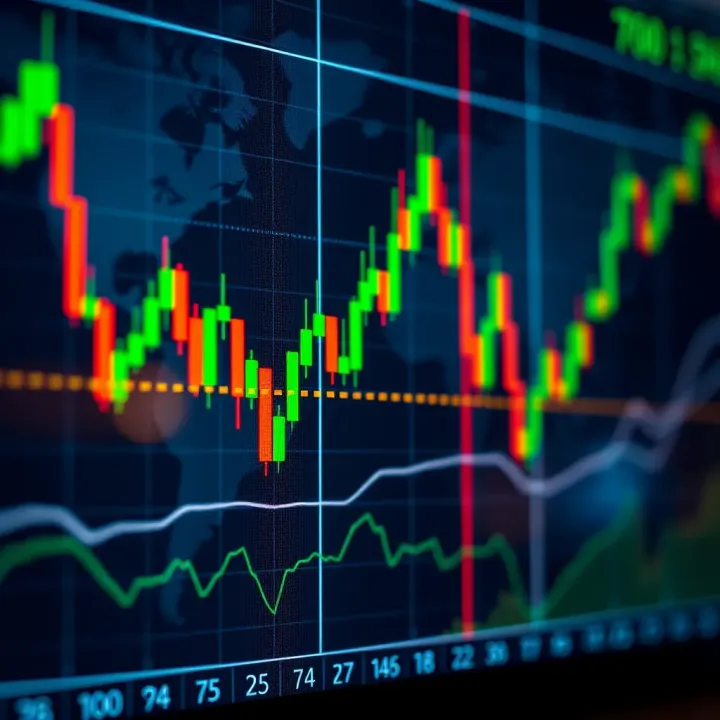
📘 Learn forex trading with easy-to-follow PDF tutorials designed for Nigerian traders. Master strategies, risk management & thrive in Nigeria's market today! ₦
Based on 11 reviews